Anthropic Is Profitable, On Track for $47B ARR, and Filing Its IPO in October.
As of July 14, 2026, per the Unrot.co July 14 analysis, the picture of Anthropic’s business heading into its October IPO filing:





“OpenAI is heading into its IPO with a lawsuit from Apple, a government-stake proposal that raises governance questions, and a consumer-first brand that faces pricing competition from every direction. Anthropic is heading into its IPO as the profitable enterprise revenue leader, with a custom chip deal in negotiation, a safety-first reputation that has survived its own government ban, and the cleanest financial story in frontier AI. The most important AI business story of July 2026 is not who launched the flashiest model. It is who has been making boring, disciplined moves for twelve months.”
The Numbers: What Anthropic’s Pre-IPO Position Actually Looks Like
As of July 14, 2026, per the Unrot.co July 14 analysis, the picture of Anthropic’s business heading into its October IPO filing:
- Annualised revenue run rate: approximately $47 billion, making it the revenue leader in frontier AI
- Profitability: reportedly profitable in 2026, a milestone OpenAI has not yet reached
- Primary revenue driver: Claude Code, which reached $2.5 billion ARR by February 2026 and has continued compounding
- IPO timeline: October 2026 filing, ahead of OpenAI’s November target
- Compute cost management: early talks with Samsung for custom inference chips targeting the $1.25 billion monthly compute bill
- Fable 5 credit extension: extended to September 30, 2026, giving enterprise users a longer runway before standard credits-only billing
The $47 billion ARR figure is the one that most changes the framing of Anthropic in public markets context. At the time of its $60 billion valuation round in late 2024, Anthropic was priced on future revenue potential. As the Build Fast with AI July 14 coverage notes, an October filing with $47 billion ARR and profitability creates a fundamentally different investor conversation than a filing based on projected future growth.
The Contrast That Everyone Is Sharing: Anthropic vs OpenAI Heading Into IPO Season
The sentence that has been shared most widely across AI founder and investor communities this week comes from Unrot.co’s July 14 analyst take: “Anthropic has spent 2026 making boring, disciplined moves while everyone else made headlines.”
The contrast with OpenAI is precise and verifiable. In 2026, OpenAI has made the following headlines: Altman-Musk public feud over SpaceX valuation, Apple lawsuit for trade secret theft, the government stake proposal raising governance questions about AI lab independence, GPT-5.6 broad release clearance after government pre-release review, and Sam Altman publicly telling investors the new world order in AI favours OpenAI.
In the same period, Anthropic’s 2026 headlines have been: Fable 5 government ban (not Anthropic’s choice), Fable 5 restoration, Claude Code revenue leadership, Samsung chip talks, Glasswing programme, Alberta government cybersecurity case study, Claude Science launch, and $47 billion ARR. Every Anthropic headline is either an external event imposed on it or a business result.
Why the IPO Contrast Matters for Businesses Choosing AI Partners
The Anthropic-vs-OpenAI IPO framing is not primarily an investment story. It is a vendor selection story for businesses choosing which AI provider to build deep integrations on.
An AI lab heading into its IPO as the profitable revenue leader with predictable costs is a more stable long-term vendor than one heading into its IPO as the consumer giant with a pending lawsuit, unresolved governance questions, and a valuation that requires aggressive growth assumptions to justify. Stability matters for deep integrations: when you build automation workflows that depend on a specific AI provider’s API, you are making a multi-year architectural decision.
The AI agent platform war analysis argued for portable architecture and no single-vendor lock-in precisely because this kind of vendor risk is real. The October filing does not eliminate that risk for Anthropic. But it changes the risk profile: a profitable, enterprise-revenue-leader Anthropic heading into an IPO is a more predictable vendor than a pre-profitability Anthropic was.
Fable 5 Credit Extension to September 30: What Changed and Why
Anthropic extended Fable 5 credit-based access to September 30, 2026, per AIToolsRecap’s July 14 coverage. The original post-restoration billing structure moved Fable 5 to usage credits from July 8. The extension gives Pro, Max, Team, and Enterprise subscribers until September 30 before Fable 5 requires credits on top of their subscription — nearly three additional months compared to the original timeline.
The extension is commercially significant in the context of the August 31 Sonnet 5 introductory pricing expiry. The original timeline put two simultaneous pricing changes in close proximity: Fable 5 credits-only from July 8, and Sonnet 5 moving from $2/$10 to $3/$15 on September 1. By extending Fable 5’s grace period to September 30, Anthropic gives enterprise teams a month of Sonnet 5 standard pricing before also absorbing Fable 5 credit requirements.
For enterprise teams managing AI budgets: the revised pricing calendar is now Sonnet 5 standard pricing from September 1 ($3/$15 with 1.0-1.35x tokeniser multiplier), followed by Fable 5 credits-only from October 1. Plan your Q4 AI budget around both changes hitting in the same 30-day window.
Cursor Builds a Claude Cowork Rival: The Agentic Workspace War
Cursor is building its own long-horizon task execution interface — a direct competitor to Claude Cowork and ChatGPT Work, per AIToolsRecap’s July 14 coverage. The product targets developers who want the same long-running agent session capability as Claude Cowork but within the Cursor IDE environment rather than a standalone product.
The Cursor move is notable because Cursor’s core product is built on Claude and GPT models. Cursor building its own agentic workspace layer means it is competing with its own model providers at the product layer while continuing to depend on them at the model layer. This is the same dynamic that plays out in every platform market: the infrastructure provider and the platform builder eventually compete for the same user relationship.
For developers currently using Cursor for AI-assisted coding: the new Cursor agentic workspace is worth evaluating against Claude Cowork for multi-file, long-horizon development tasks. The task-model matching framework applies at the product level here: the right tool is the one that produces the highest automation ratio on your specific development workflow, not the one with the most impressive feature list.
Google Rationing Gemini to Meta: The Compute Crunch in Real Time
One of the week’s most revealing competitive signals: per the Build Fast with AI July 14 analysis, Google ran short of compute and started rationing Gemini access to Meta. The specific dynamic: Meta was renting Google Cloud compute for AI workloads. When Google’s own AI infrastructure demand exceeded its available capacity, Google prioritised its own projects over Meta’s rented capacity, leaving Meta in a compute queue.
The Google-Meta compute rationing is the most concrete evidence yet of what vertical integration means in the AI infrastructure market. Google runs its own models, its own TPUs, and its own cloud. When capacity tightens, Google’s internal projects come first. Meta, renting capacity from a competitor whose own projects take priority, has no recourse except to build its own infrastructure — which is exactly what Meta Compute, announced last week, is designed to address.
For businesses running AI workloads on cloud infrastructure: the Google-Meta rationing is the clearest possible signal for the value of compute diversification. The AI agent platform war analysis’s recommendation of no single-vendor compute lock-in is validated by a major tech company being queue-rationed by its cloud provider during a capacity crunch. If Meta can be rationed, your smaller enterprise workloads can be rationed too. Multi-cloud AI infrastructure is not a luxury architecture choice. It is the risk management baseline.
Grok 4.5’s First Week: What the Independent Benchmarks Actually Show
After Elon Musk’s launch-day claim that Grok 4.5 hit number one on SWE Marathon, independent benchmarking from Artificial Analysis ranked Grok 4.5 fourth on its Intelligence Index with a score of 54: behind Claude Fable 5 (#1), GPT-5.5 (#2), and Claude Opus 4.8 (#3).
The gap between Musk’s launch-day framing and Artificial Analysis’s independent assessment is the recurring pattern in frontier AI model releases: the company measures performance on the benchmarks where it performs best, independent evaluators measure across a broader benchmark set. Neither is dishonest. They are measuring different things.
Where Grok 4.5 does have a genuine, independently verified advantage: token efficiency. Grok 4.5’s V9 architecture produces higher-quality outputs per input token on reasoning and coding tasks than its predecessor, with benchmarked efficiency gains that change the cost math for high-volume agentic workloads. If your AI budget is constrained by output token volume more than by capability level, Grok 4.5’s token efficiency at its pricing tier is worth a direct comparison test against Sonnet 5 and GPT-5.6 Terra on your specific workflows.
Qualcomm in Talks to Acquire Tenstorrent for $8-10 Billion
Qualcomm is in early talks to acquire Tenstorrent, the RISC-V AI chip company co-founded by Jim Keller, per Crescendo’s AI news coverage, at a reported valuation of $8 to $10 billion. Tenstorrent designs AI chips on the open RISC-V instruction set, providing an alternative to Nvidia’s proprietary CUDA architecture.
The Qualcomm-Tenstorrent talks, if they proceed, create the third major AI chip architecture in enterprise deployment alongside Nvidia CUDA and Google TPU. A RISC-V based AI chip from a major semiconductor company (Qualcomm’s mobile chip revenues provide the production scale) would give enterprises a genuine third option for AI inference hardware that does not depend on Nvidia’s supply constraints or Google’s vertical integration strategy.
The timeline for Qualcomm-Tenstorrent chips to reach production at scale is 24 to 36 months from any deal close. The near-term implication of TSMC’s sold-out N3 node and the SK Hynix $1 trillion memory monopoly does not change. But the Qualcomm talks are the market signal that the infrastructure concentration in AI chips is generating acquisition-level interest in alternatives.
July 17: The Most Anticipated AI Day of the Year
Two days from now, July 17, is shaping up as the biggest single day in AI in 2026. Per the Build Fast with AI July 14 preview, two events are landing simultaneously: Google’s Gemini 3.5 Pro is expected to launch, and the Shanghai World Artificial Intelligence Conference opens with President Xi Jinping attending in person for the first time since the conference began in 2018.
The collision of these two events on the same date is not accidental. The Shanghai World AI Conference was originally scheduled for July 10, before the GPT-5.6 broad release and Grok 4.5 launch dominated that day’s news cycle. Gemini 3.5 Pro’s July 17 expected launch date puts the West’s most anticipated summer model release on the same day as the East’s highest-profile AI governance and showcase event.
Xi Jinping’s first in-person attendance since 2018 is significant: it signals that China’s AI narrative, particularly in the week that the anthropomorphic AI law took effect and the Tang Jie open AI memo was published, is being managed at the highest leadership level. The Shanghai conference will produce China’s most prominent AI capability demonstrations and policy statements of the year. Watch July 17 as closely as any model benchmark release.
What the Boring Disciplined Moves Pattern Looks Like From the Outside
The Unrot.co framing — Anthropic making boring, disciplined moves while everyone else makes headlines — is the pattern that every successful enterprise technology company has followed at the same stage of a technology transition.
Salesforce in 2003 to 2008. AWS in 2006 to 2012. Shopify in 2013 to 2018. Each of these companies spent the period when their market was most exciting to outside observers making decisions about infrastructure reliability, enterprise contract depth, cost structure, and customer retention that looked boring at the time and looked decisive in retrospect. The companies making headlines during those periods — Siebel, Rackspace, Magento — have varying outcomes.
Anthropic’s boring, disciplined moves in 2026: profitable operations at $47 billion ARR, custom chip talks that directly address the largest cost line, safety architecture that survived a government ban and came out with stronger enterprise trust, and the Bending Spoons-style outcome of building Claude Code into a $2.5 billion ARR product that the people who use it most trust for autonomous task completion. None of these are flashy. All of them compound.
For businesses building AI automation: this is the pattern to follow at your own scale. The automation ratio framework, the governance-first approach, and the process ownership argument are all expressions of the same discipline: build the foundations correctly, measure whether they work, and compound rather than chase headlines.
The Bottom Line
Anthropic’s pre-IPO position — profitable, $47 billion ARR, revenue leader, October filing, Samsung chip talks, Fable 5 extension — is the most important AI business story of July 2026 because it demonstrates what disciplined execution in AI looks like at company scale. It is the enterprise version of the Bending Spoons efficiency story: boring decisions that compound into a position that looks, in retrospect, like the obvious winner.
OpenAI will likely have a larger IPO by valuation. That does not mean Anthropic’s position is weaker. In enterprise technology, the company that wins the next decade is not always the one with the largest consumer brand at IPO. It is usually the one that built the most reliable infrastructure for the customers who matter most. Anthropic has been building that, quietly, for the whole of 2026.
Frequently Asked Questions
Is Anthropic really profitable and what is its revenue?
Anthropic is reported to be profitable in 2026 with an annualised revenue run rate of approximately $47 billion, per Unrot.co’s July 14 analysis citing analyst estimates. The primary driver is Claude Code, which reached $2.5 billion ARR by February 2026. The $47 billion ARR figure represents a significant acceleration from its $4 billion ARR in late 2024, driven by enterprise adoption of Claude Code and agentic workflow products. Anthropic is filing its IPO in October 2026.
What changed with Fable 5 pricing and when do credits become mandatory?
Anthropic extended the Fable 5 grace period to September 30, 2026, per AIToolsRecap. The original timeline moved Fable 5 to credits-only from July 8. The extension gives Pro, Max, Team, and Enterprise subscribers until October 1 before Fable 5 requires usage credits on top of their subscription. This means Q4 2026 will see two pricing changes close together: Sonnet 5 standard pricing from September 1 ($3/$15 with 1.0-1.35x tokeniser multiplier) and Fable 5 credits-only from October 1.
What is Cursor building and how does it compare to Claude Cowork?
Cursor is building a long-horizon task execution interface that competes directly with Claude Cowork and ChatGPT Work for multi-step development workflows. Unlike Claude Cowork, which is a standalone product, Cursor’s agentic workspace is integrated into its existing IDE environment. The target user is a developer who wants Claude Cowork-style long-running agent sessions without leaving the Cursor coding environment. Cursor’s models are primarily Claude and GPT, meaning it competes with its own model providers at the product layer while remaining dependent on them at the model layer.
What are Grok 4.5’s independent benchmark results?
Independent benchmarking from Artificial Analysis ranked Grok 4.5 fourth on its Intelligence Index with a score of 54, behind Claude Fable 5 (#1), GPT-5.5 (#2), and Claude Opus 4.8 (#3). Per the Build Fast with AI July 10 analysis, Grok 4.5’s independently verified advantage is token efficiency: its V9 architecture produces higher-quality outputs per input token on reasoning and coding tasks, changing the cost math for high-volume agentic workloads. The launch-day claim of number one on SWE Marathon reflects Grok 4.5’s performance on specific coding benchmarks, not its overall intelligence index ranking.
What is happening on July 17 and why does it matter?
July 17 is expected to be the most significant single day in AI in 2026: Gemini 3.5 Pro is expected to launch — the West’s most anticipated summer model release — on the same day the Shanghai World Artificial Intelligence Conference opens with President Xi Jinping attending in person. Per the Build Fast with AI July 14 preview, Xi’s first in-person attendance since 2018 signals that China’s AI narrative is being managed at the highest leadership level. The conference will produce China’s most prominent capability demonstrations and policy statements of the year, colliding with the Gemini 3.5 Pro launch in a single news cycle.
Related Reading From This Series
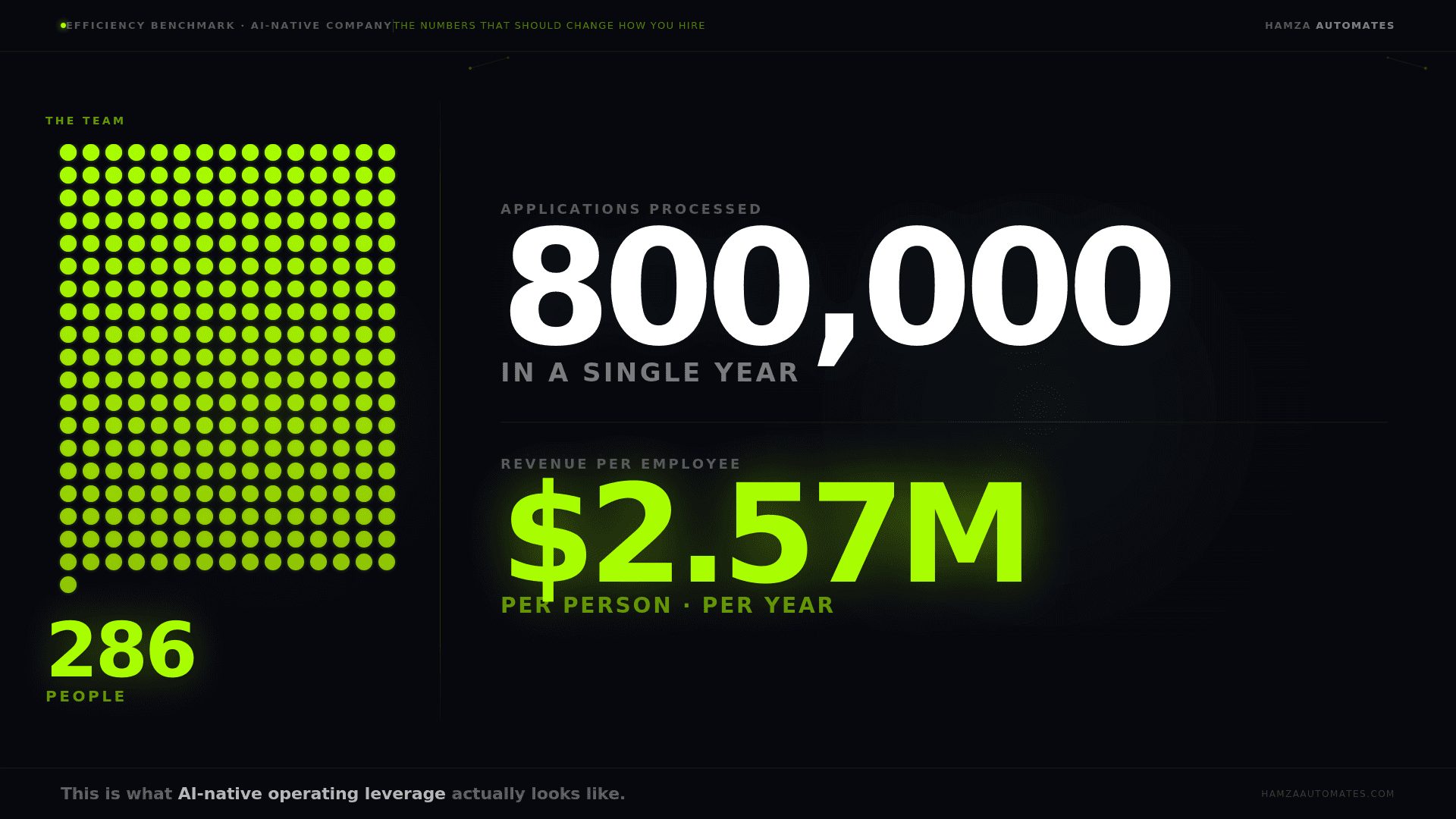
Bending Spoons: $2.57M Revenue Per Employee — the company-scale version of the boring-disciplined-moves pattern Anthropic is executing
The AI Agent Platform War — why portable architecture and compute diversification matter given the Google-Meta rationing event
The ‘AI Business’ Advice Is Wrong — why process ownership and disciplined execution beats headline-chasing at every company scale
The Automation Ratio — the measurement framework for evaluating Cursor’s agentic workspace vs Claude Cowork on your workflow
Stop Chasing the Biggest Model — how to evaluate Grok 4.5’s token efficiency claim against your actual cost structure
TSMC Record + Anthropic-Samsung + Gemini Enterprise — the infrastructure context for today’s Anthropic IPO and compute rationing stories
Fable 5 Returns, Sonnet 5 Launches — the context for the Fable 5 credit extension and the pricing calendar that now runs through Q4 2026
About the Author: Hamza Baig is the founder of Hexona Systems, an AI automation agency serving clients across six continents, and creator of the AI Automation Institute, where over 40,000 entrepreneurs have learned to build and scale automation businesses. He has been featured in GHL Top 50, Yahoo Finance, and Brainz Magazine. Follow him at @hamza_automates | Read more articles | Work with Hamza
About
Hamza Baig is the founder of Hexona Systems—an automation agency and softwareplatform that helps thousands of entrepreneurs and business owners implement AI-powered workflows at scale.