The ‘AI Business’ Advice Is Wrong. Here’s What Actually Builds a Defensible Business With AI in July 2026.
There is a piece of advice spreading through every entrepreneurship community right now that I want to push back on directly.





“Everyone is telling founders to ‘start an AI business.’ I have been building AI automation businesses since before that was a category. The advice I hear circulating is mostly wrong, and the businesses I see succeeding are doing something different from what is being taught.”
There is a piece of advice spreading through every entrepreneurship community right now that I want to push back on directly.
The advice is: “Start an AI automation agency.” Or: “Build AI tools and sell them.” Or its slightly more sophisticated cousin: “Launch a business that uses AI to do [thing] faster, then charge for the output.”
The problem is not that any of these is wrong as a starting point. The problem is what gets left out. Most people following this advice are building something that is genuinely replicable by anyone else following the same advice, using the same tools, on the same models, tomorrow. That is not a business. That is a head start.
Head starts matter. I had one. But I have been watching the same pattern play out across dozens of clients and hundreds of community members: the people who build on head starts without creating defensibility fall behind when the tools they built on become commodities. And in AI, tools become commodities faster than in any other software category in history.
The Problem With ‘AI Business’ as a Category
Every analyst covering the July 2026 AI market is saying some version of the same thing. Founder-focused coverage this week put it plainly: “Generic AI gets attention, but vertical AI gets budgets.” The shift most often cited is from companies ‘trying AI to produce content’ toward companies ‘seeking solutions to automate processes and reduce costs.’
Both of those descriptions are about outcomes, not tools. And that is the precise distinction that separates the businesses building defensible positions in AI from the businesses that are going to struggle as model capability becomes broadly accessible.
Let me say this as directly as I can: if the main thing your business does is use a frontier AI model to produce output that any of your competitors can produce by subscribing to the same model, you do not have a business yet. You have a workflow. A good workflow, maybe. A profitable workflow right now, possibly. But not a business in the sense that compounds.
What I Watched Happen When Claude Fable 5 Went Offline for 19 Days
In the 19 days that Claude Fable 5 was offline following the government export ban covered in this series, something revealing happened across the AI automation community.
The businesses that had built their operations on top of Fable 5 specifically — tight coupling to its specific capabilities, workflows that assumed its exact context window, content pipelines calibrated to its particular voice — had to scramble. Not catastrophically, in most cases. But visibly. They had to switch models mid-workflow, explain to clients why output quality had changed, and rebuild routing logic they had never expected to need.
The businesses that did not scramble were the ones who had built around outcomes rather than around a specific model. They had abstraction layers. They had fallback routing. And more importantly, they had built their client relationships around the result they delivered rather than the specific tool they used to deliver it.
That 19-day disruption was the most useful natural experiment in AI business model resilience I have personally observed. The lesson is not subtle: if a model going offline disrupts your business significantly, the model is inside your value proposition in a way that creates fragility. Get it out of there.
The Distinction That Actually Matters: Process Ownership vs Tool Delivery
Here is the frame I use when I work with people on building AI automation businesses. There are two fundamentally different things you can do with AI:
Tool delivery: you access AI capability and sell access to that capability, either directly (subscriptions, API wrappers) or indirectly (doing the prompting for your client and charging for the output). The model is your product. This is the most common ‘AI business’ being built right now.
Process ownership: you own a specific business outcome for your client, and AI is one of the components you use to deliver it reliably. The outcome is your product. The model is an input.
These sound similar but they are not. Tool delivery is margin-compressed by every improvement in model accessibility. When Claude Sonnet 5 launched this week at $2 per million tokens with better agentic reliability than previous models, it made tool delivery businesses slightly cheaper to operate and slightly easier to compete with. Process ownership businesses were entirely unaffected, because the cost of the intelligence layer going down does not change the value of owning the outcome.
What Process Ownership Actually Looks Like
At Hexona Systems, the shift from tool delivery to process ownership happened gradually and then all at once. Early on, I was building automations for clients and charging for the automation. The client owned the outcome. I owned the build.
The problem: every time something changed in the model landscape, pricing, or tooling, I had to explain to clients why I was rebuilding something they thought was finished. The automation was the product, and the automation had dependencies.
The shift happened when I started structuring client relationships around specific business outcomes with performance benchmarks. Not “We will build you a lead follow-up automation.” Instead: “We will get your lead response time under 15 minutes, your follow-up completion rate to 95%, and your sales team’s time on manual chasing to zero.”
When the model changes, I swap it. When the platform changes, I update the routing. The client does not experience either of those things as disruption, because they are not paying for the automation. They are paying for the outcome. That outcome is mine to deliver by whatever means work best.
This is the same logic the most profitable AI business analysis is pointing toward: “The most profitable AI businesses in 2026 are those that are moving from Service Providers to Outcome Providers. Instead of selling a tool that helps you do marketing, they sell the marketing results.” That framing is correct. The execution detail most people miss is what you have to build before you can make that offer credibly.
The Three Things You Need Before You Can Own an Outcome
A Specific, Measurable Outcome With a Before and After
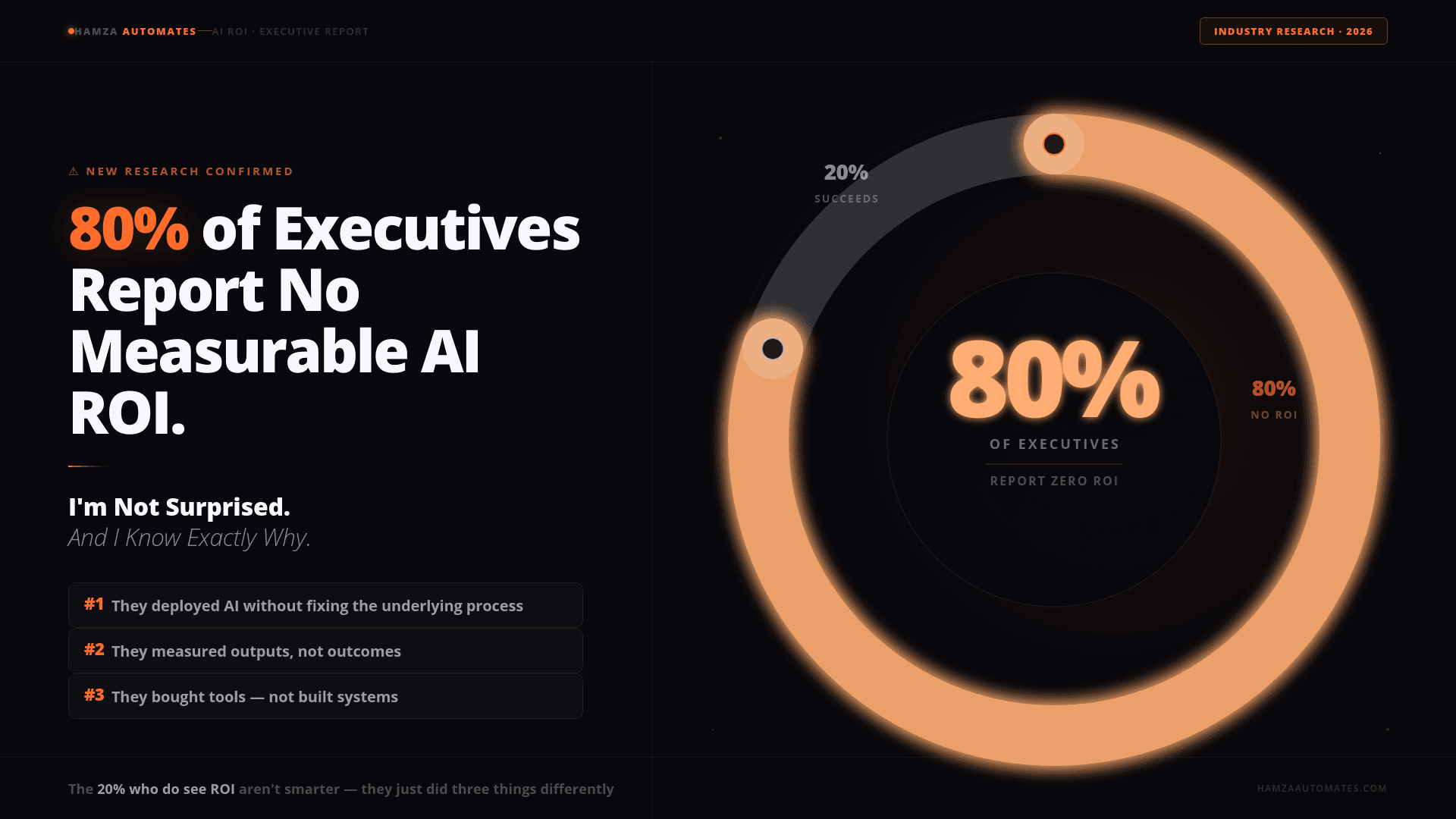
This is the same thing I pushed in the 80% no-ROI piece: the businesses that see measurable AI impact are the ones that named a specific number before they started. For an outcome-ownership business model, you need to know: what is the number you are moving for your client, what is it at baseline, and what do you guarantee it reaches?
Without this, you are selling effort. Selling effort is not scalable. It produces scope creep, revision cycles, and client dissatisfaction when the effort does not produce the implicit result they were expecting. Selling outcomes is scalable because the scope is defined by the result, not by the activities required to get there.
Data That Makes Your System Better Over Time
This is the Nadella learning loop argument applied at the business level. Every outcome you deliver for a client generates data: what inputs produced what outputs, what failures looked like, what the edge cases were. That data, captured and structured, makes your system better at delivering the next version of the same outcome. A competitor starting fresh with the same tools does not have that data. This is your moat.
Most AI automation businesses are not capturing this data in a structured way. They build a workflow, it runs, it produces outputs, those outputs disappear into client deliverables. The system does not learn from what it produced. The next client gets a rebuilt version of the same system rather than a system that has been improved by the prior delivery.
Fix this before you try to own outcomes. Capturing the right data from every delivery is the infrastructure that makes outcome ownership defensible.
A High Automation Ratio on the Core Workflow
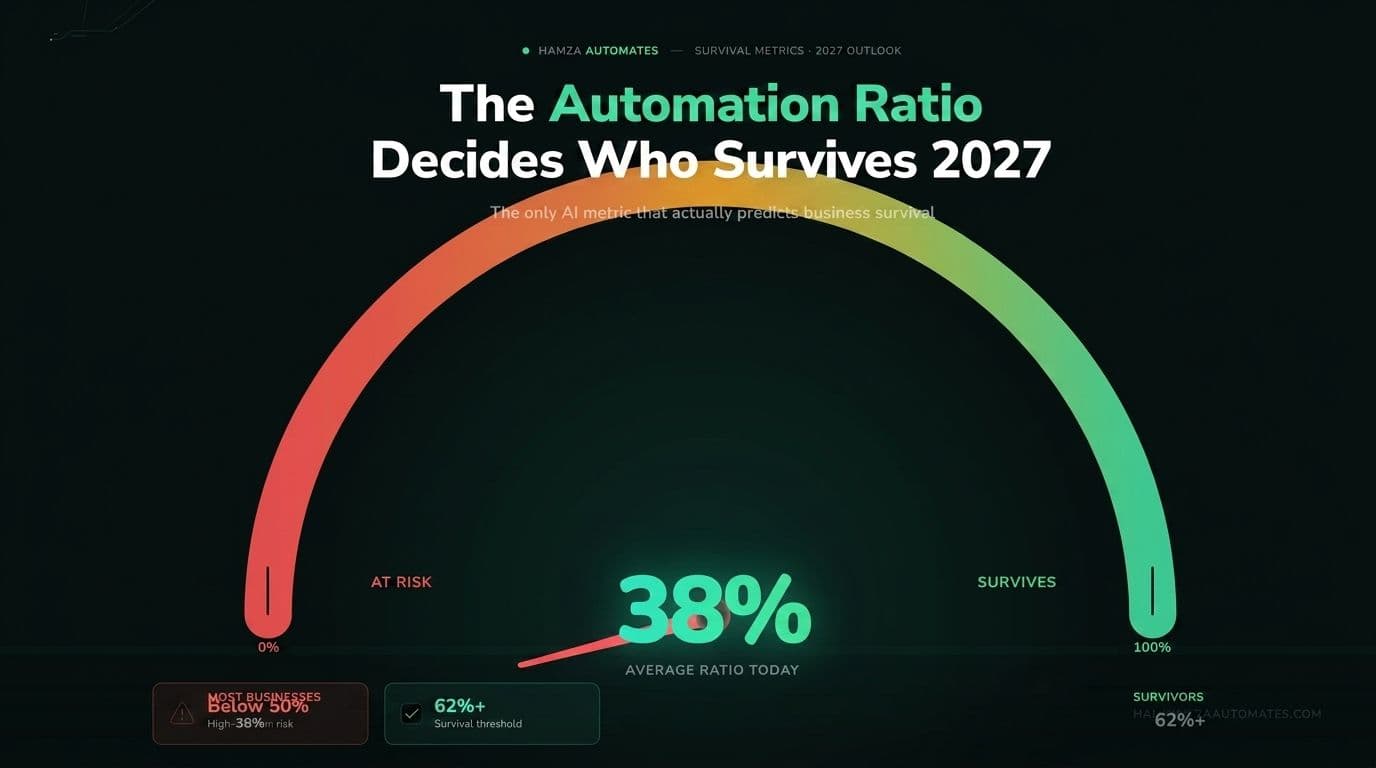
You cannot own a business outcome if the work required to deliver it does not scale. If delivering the outcome for one client requires 40 hours of manual work, delivering it for ten clients requires 400 hours. You have built a job, not a business. The automation ratio framework is directly relevant here: before you sell an outcome, you need the core workflow producing that outcome to run at 70% or higher without human intervention. That is the level at which the margin structure of an outcome-based business actually works.
This is why the sequence matters. You cannot start with outcome ownership if you have not first built the systems and achieved the automation ratio that make outcome delivery repeatable. Most people try to sell outcomes before they have built the system to deliver them. They end up working harder and earning less than they would have selling the tool delivery version of the same service.
Why the July 2026 Market Makes This More Urgent, Not Less
The July 2026 AI market is precisely the moment when this distinction becomes commercially decisive. Three forces are converging simultaneously. Model costs are rising with the memory shortage, making thin-margin tool delivery businesses more exposed. Model capability is consolidating across providers, with Sonnet 5 at $2/$10 making ‘we use a better model than our competitors’ harder to sustain as a differentiator. And the governance requirements now being formalised through government standards and voluntary frameworks are raising the bar for what it takes to run AI automation that enterprises will trust with sensitive workflows.
Tool delivery businesses feel all three of those pressures directly. Outcome ownership businesses feel them as inputs to manage, not threats to their value proposition.
The window where a capable founder can build an outcome-ownership AI business at a reasonable cost and still generate significant competitive advantage is right now, in this July 2026 market. The tools are broadly accessible. The governance bar is rising but not yet prohibitive. The clients who need these outcomes are actively spending. Six months from now, the tools will be cheaper and the governance bar higher. A year from now, the market will have consolidated around a smaller number of credibly defensible providers.
What I Actually See Working Right Now
Across the Hexona client base and the AI Automation Institute community, the businesses generating the clearest compounding results in July 2026 share three characteristics that have nothing to do with which model they use.
They Own One Ugly Workflow for One Specific Industry
Not a broad ‘AI automation agency.’ One workflow. Accounts receivable in medical practices. New hire onboarding for construction companies. Listing generation for real estate teams. Weekly reporting for paid media agencies. Monk’s $1 billion in AR under management at 84.7% automation rate is the enterprise version of exactly this: one workflow, one industry, taken to industrial scale.
The specificity is not a limitation. It is the moat. When you have solved accounts receivable for 50 medical practices, you have data, patterns, and a system that understands the specific failure modes of that workflow in that industry. Nobody can replicate that with a general-purpose AI subscription. They would need your historical data to do it.
They Charge for the Outcome, Not the Hours
The businesses I see running highest margins are not charging by the automation or by the hour. They are charging a monthly fee against a specific KPI. If the accounts receivable days outstanding drops from 45 to 28, they earn their fee. If it does not, the conversation is about what needs to change in the system, not about whether the hours were delivered.
This pricing model is only possible when the automation ratio is high enough that your delivery cost per client is predictable and scalable. It is the product of the system work, not the starting point.
They Treat Every Delivery as a Training Run
Every workflow run, every output, every client interaction is captured and structured. Not just for reporting. For improvement. The system that runs for client 15 is materially better than the system that ran for client 1, because it has been trained on 14 prior deliveries worth of real-world edge cases, failure patterns, and client feedback.
This is how you build a data moat without a research lab. You do not need millions of training examples. You need structured capture of the domain-specific examples your workflow produces every week, and a system that uses those examples to improve the next version.
The Honest Conversation About Timing
I am going to say something that the ‘start an AI business now’ advice rarely includes: this is harder than it looks, and the businesses that do it well are not the ones who moved the fastest. They are the ones who picked the right workflow, built it correctly, and resisted the temptation to expand before the first system was working.
The 74% rollback rate I cited in the governance article applies to AI automation businesses as much as it applies to enterprise AI deployments. Most people who ‘start an AI agency’ or ‘launch an AI automation business’ in the next three months will not be running the same business in twelve months. Not because they are not capable, but because they will have built on top of tools rather than on top of outcomes, and the tool landscape will have shifted under them.
The businesses that will still be running and growing twelve months from now are the ones that started with one specific outcome for one specific client type, built the system to deliver it reliably, captured the data from that delivery, and then, and only then, started expanding.
The Bottom Line
The question everyone is asking in July 2026 is: “How do I build a business with AI?” The question they should be asking is: “Which specific outcome can I own reliably for a specific type of client, and what would it take to build a system that delivers it?”
The first question leads to AI agencies that compete on model access and workflow complexity. The second question leads to defensible businesses built on proprietary data, specific domain expertise, and client relationships defined by outcomes rather than activities.
I know which one compounds. I have watched both play out over four years at Hexona Systems. Pick the outcome. Build the system. Capture the data. The model will take care of itself.
Frequently Asked Questions
What is the difference between tool delivery and process ownership in AI automation?
Tool delivery means selling access to AI capability, either directly or by using AI tools to produce output for clients. The model is the product. Process ownership means owning a specific business outcome for a client, using AI as one component of the delivery system. The outcome is the product. Tool delivery is margin-compressed by every improvement in model accessibility. Process ownership is not, because the value is in the outcome, not the tool used to produce it.
How do I know which workflow to own?
Start by identifying workflows that meet three criteria: they happen repeatedly for a specific type of client, they have a measurable outcome that clients care enough about to pay for improvement, and they are currently expensive in human time relative to the value produced. The no-code automation workflow guide covers the mapping process for identifying and evaluating workflow candidates in detail.
What automation ratio do I need before I can sell outcomes?
In practice, 70% or higher on the core workflow is the threshold where an outcome-based business model becomes financially viable. Below that level, the human intervention cost per delivery is too high to maintain consistent margins. The automation ratio framework covers how to measure your current ratio and the two changes (task specificity and context richness) that move it most reliably.
Why does the AI model you use matter less than the outcome you own?
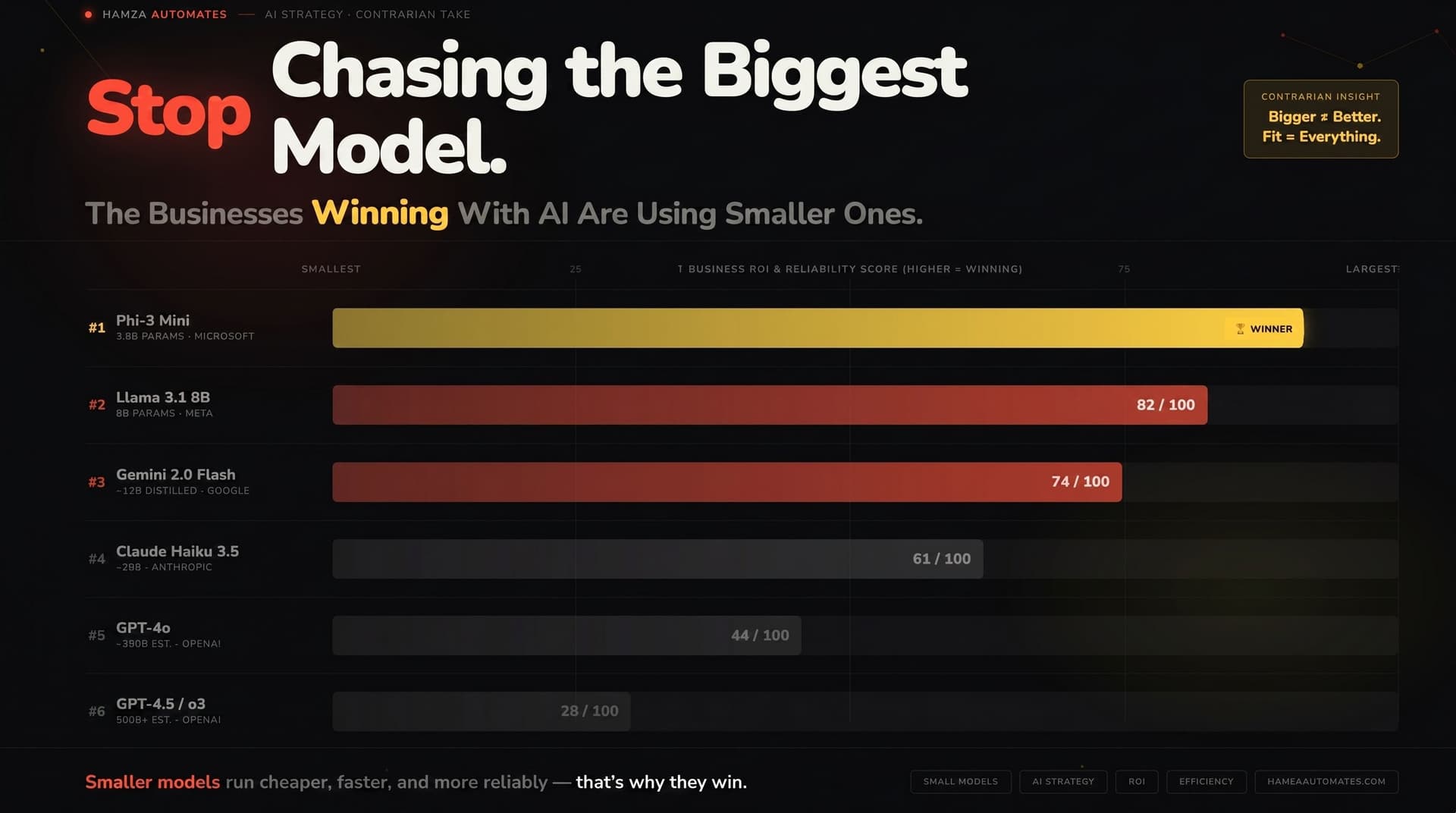
Because models are commodities on a 12-month horizon. Claude Sonnet 5 at $2/$10 today produces output that GPT-5.5 at $5/$15 produced two months ago. In six months, GLM-5.2’s open-weight successors will likely match what Sonnet 5 does today. The specific model you use is the most replaceable component of your system. The outcome you have demonstrated you can deliver reliably, the data you have accumulated from delivering it, and the client relationships built on that track record are the hardest things to replicate.
Is it too late to start an AI automation business in July 2026?
No. But the playbook for what works is different from what it was in 2023 or even 2025. Generic AI services are crowded and margin-compressed. Specific, outcome-focused, vertical automation businesses with proprietary data layers are still wide open because they require real domain expertise and operational discipline rather than just model access. The barrier to entry on good AI automation businesses has gone up, not down, which means fewer people are building them correctly — which is an opportunity.
Related Reading From This Series
You Don’t Have an AI Problem. You Have a Systems Problem. — the foundation piece on building systems rather than buying tools
80% of Executives Report No Measurable AI ROI — why outcome-focused deployment is what separates the 20% who see results
The Automation Ratio — the metric that tells you when your system is ready to sell outcomes
Satya Nadella’s Learning Loop Warning — why proprietary data from your deliveries is your actual competitive moat
The No-Code Automation Workflow Guide — the 5-step process for mapping and building the workflow you want to own
74% of AI Agent Deployments Get Rolled Back — the governance discipline that makes systems reliable enough to sell outcomes on
RAMageddon: Why AI Is Getting More Expensive — why tool delivery margins are structurally under pressure and outcome ownership is not
Hamza Baig is the founder of Hexona Systems, an AI automation agency serving clients across six continents, and creator of the AI Automation Institute, where over 40,000 entrepreneurs have learned to build and scale automation businesses. He has been featured in GHL Top 50, Yahoo Finance, and Brainz Magazine. Follow him at @hamza_automates | Read more articles | Work with Hamza
About
Hamza Baig is the founder of Hexona Systems—an automation agency and softwareplatform that helps thousands of entrepreneurs and business owners implement AI-powered workflows at scale.