Retainers vs Projects: AI Automation Agency Models
Retainers vs projects for an AI automation agency: how each model works, the numbers behind recurring revenue, what to put in a retainer, capacity planning and converting project clients.





Retainers vs Projects: Choosing an AI Automation Agency Business Model
Most new automation agencies start the same way: sell a project, build it, hand it over, find the next client. It works until you notice that every month starts at zero. Revenue swings wildly, you’re always selling, and clients whose systems you built quietly stop calling until something breaks.
The agencies that grow steadily usually make one change: they pair every build with a monthly retainer. This guide compares the two models honestly, shows the numbers behind recurring revenue, explains what a retainer should include, how many retainer clients you can realistically support and how to move project clients onto retainers. It’s the business-model companion to my guide on how to price AI automation services.
Quick answer: For most AI automation agencies, the best business model combines both: a project fee to build the system and a monthly retainer to monitor, maintain and improve it. Projects bring in upfront cash and new clients; retainers make revenue predictable, keep the system healthy and turn one sale into a long-term relationship. Sell the retainer in the original proposal, define exactly what it includes and plan your capacity so you can deliver it well.
The two models side by side
Project only
Project + retainer
Revenue
One-time, lumpy
Upfront fee plus predictable monthly income
Sales pressure
You need new clients every month
New sales grow a stable base
Client relationship
Ends at handover
Ongoing, with regular check-ins
System health
Degrades quietly after launch
Monitored, fixed and improved
Upsell opportunities
Rare, unless the client calls
Frequent, from regular reviews
Cash flow
Large swings
Smoother and easier to plan
Agency value
Hard to value, depends on the pipeline
Recurring revenue is easier to plan around and to value
Projects aren’t bad. They’re how you get through the door, and some clients genuinely need a one-off build. The problem is relying on projects alone. AI systems in particular need ongoing care: APIs change, models get updated or retired, and the client’s business changes. Many AI deployments fail in the months after launch, as I covered in why 74% of AI agent deployments get rolled back. A retainer is how you prevent that, and get paid for it.
The numbers: what recurring revenue changes
Take the lead follow-up system from my pricing guide: a $6,000 setup fee and a $750 a month retainer.
- Project only: $6,000 in year one, then nothing unless the client buys again.
- Project + retainer: $6,000 + (12 × $750) = $15,000 in year one, and $9,000 a year after that while the retainer continues.
Now scale it. Ten clients on a $750 retainer give you $7,500 a month in recurring revenue before you sell a single new project. Twenty clients give you $15,000 a month. New projects then add on top of a base that already covers your costs, instead of being the only thing keeping the lights on.
Retainer clients
At $750 / month
At $1,500 / month
5
$3,750 / month
$7,500 / month
10
$7,500 / month
$15,000 / month
20
$15,000 / month
$30,000 / month
These are illustrative figures. Typical retainers range from roughly $500 to $5,000 a month depending on how many systems you look after and how critical they are; I cover the ranges in more detail in How to Start an AI Automation Agency.
Types of retainer
Retainer type
What’s included
Typical fit
Care plan
Monitoring, alerts, fixes, updates when tools or models change
Every client with a live system; the minimum you should offer
Growth retainer
Care plan plus a set number of hours for improvements each month
Clients with a backlog of things to automate
Managed service
You run and report on the system as an ongoing service
Lead generation, reporting, support agents
Fractional automation lead
Strategy, roadmap and a block of build time each month
Growing businesses without an in-house automation person
Productized subscription
A fixed system plus support for a flat monthly fee, often with no large setup fee
Niche offers you’ve built many times
A productized subscription is worth special mention. If you serve one niche, as I recommend in How to Find Clients for an AI Automation Agency, you can package a proven system, such as a missed-call voice agent for clinics, at a lower setup fee and a higher monthly fee. Clients find it easier to start, and you build recurring revenue faster. Focus like this is also what makes an AI business defensible, as I argue in The ‘AI Business’ Advice Is Wrong.
What to put in a retainer
Vague retainers lead to scope creep and unhappy clients. Write down exactly what’s included:
- Monitoring and alerts on every workflow, so you catch failures first.
- Fixes within a stated response time, for example the next business day.
- Updates when connected tools change their APIs or AI models are updated or retired.
- Improvement hours, such as three or eight hours a month, that don’t roll over indefinitely.
- A monthly results report: hours saved, leads handled, errors caught. My guide to automated marketing reporting shows how to generate it automatically.
- A quarterly review to agree the next priorities.
And write down what’s not included: new systems, major changes and work beyond the included hours are quoted separately. That boundary is what keeps a retainer profitable.
Capacity: how many retainer clients can you handle?
Retainers only work if you can deliver them well. Estimate the hours each one really takes:
Retainer activity
Rough hours per client per month
Monitoring, alerts and small fixes
1 to 2
Improvement hours included in the plan
3
Reporting and a short check-in
1
Total
About 5 to 6
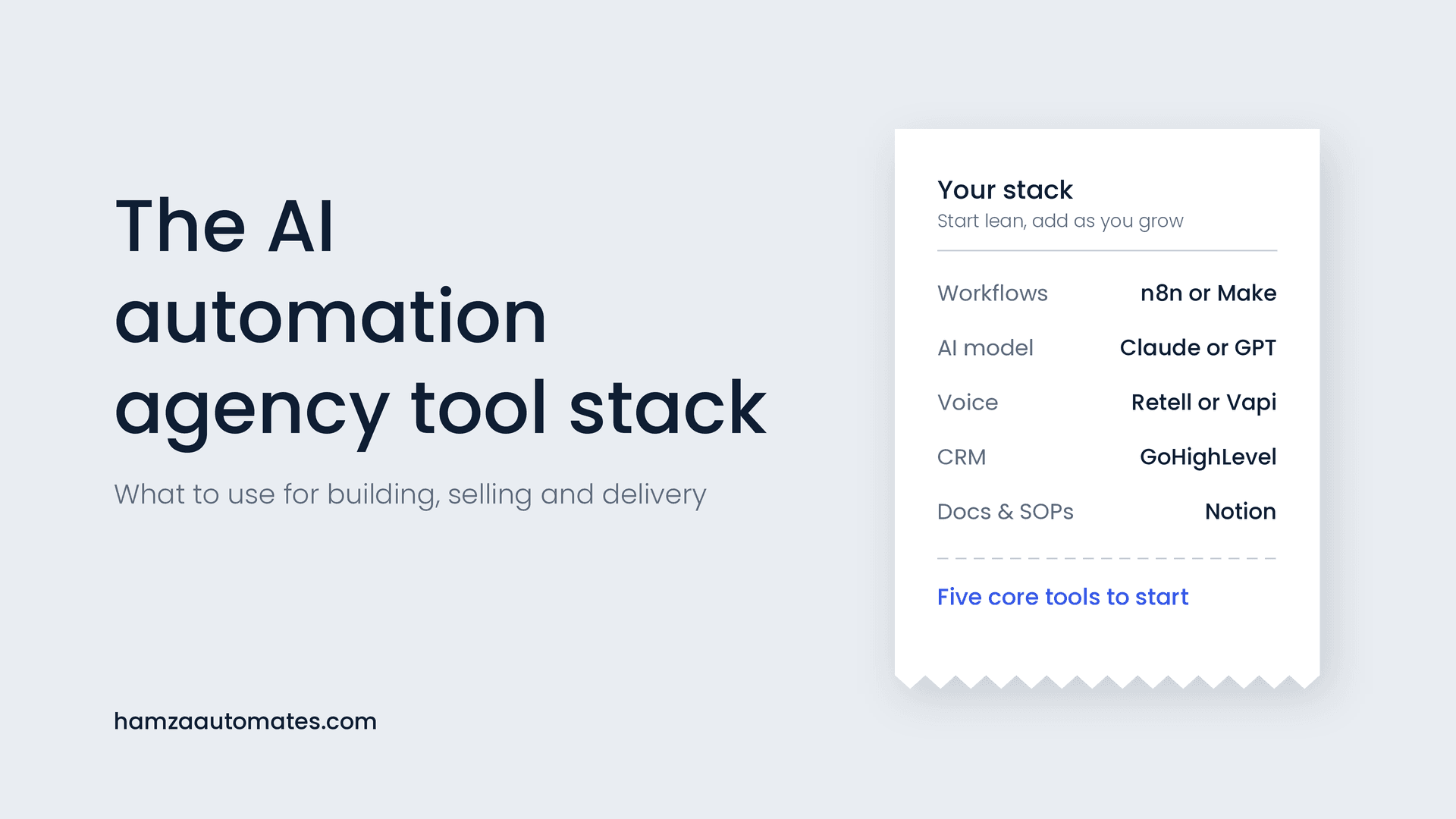
If a builder has around 100 hours a month for client work, retainers like this would let them support roughly 12 to 15 clients while leaving time for new projects, sales and admin. Standardizing your builds and tools, as I cover in The AI Automation Agency Tool Stack, is what lets that number grow without quality falling.
How to sell retainers
Put it in the first proposal. Present setup plus retainer as the recommended option. Adding a retainer after handover is much harder.
Explain what happens without it. Tools change, models are retired and edge cases appear. Be specific and honest, not alarmist.
Show results early. A first-month report with real numbers makes the retainer feel like an investment, not an overhead. Good buyers expect this; it’s question 10 in my 10 questions to ask before you hire an AI automation agency.
Offer tiers. A basic care plan and a growth retainer give clients a choice beyond yes or no.
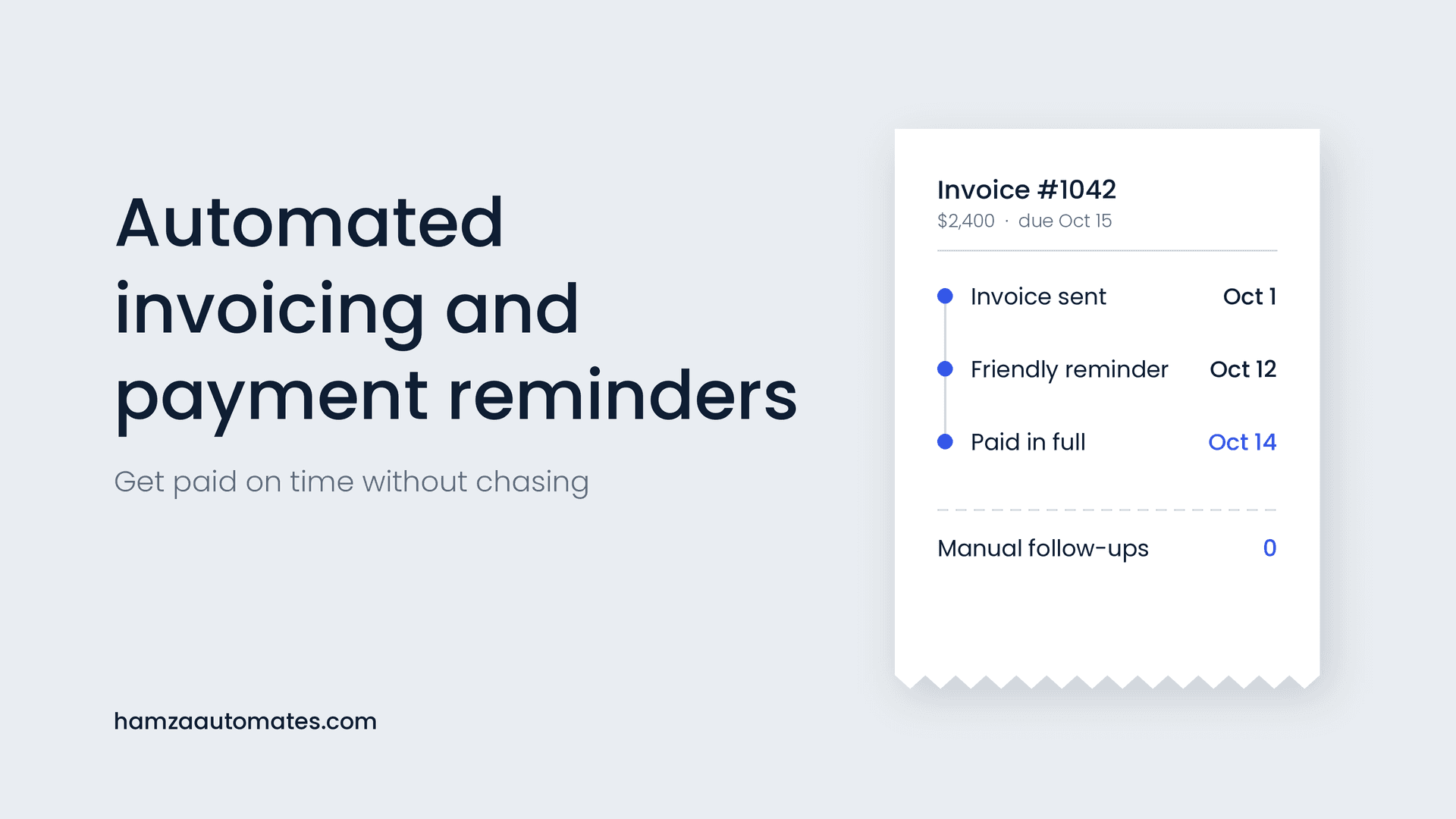
Automate billing. Collect retainers by automatic card or bank payment, using recurring billing such as Stripe subscriptions. My guide to automated invoicing and payment reminders covers the rest.
Converting existing project clients
If you already have project-only clients, reach out with something concrete: a short health check of their system, noting anything that has broken, slowed down or could be improved, and a proposal for a care plan or growth retainer. Many clients don’t realize their automation needs maintenance until they see a list of what’s changed since launch.
Retainer contract essentials
- Scope: included services, hours and what counts as extra work.
- Response times for fixes and for questions.
- Term and notice: a minimum term (for example three months) and a notice period to cancel.
- Payment: automatic monthly payment, with what happens if a payment fails.
- Pass-through costs: AI usage and software costs billed to the client or at cost.
- Offboarding: accounts, documentation and access the client keeps if the retainer ends.
Common mistakes
- Unlimited support. “We’ll fix anything” with no hours or limits erodes your margin.
- Retainers with no visible value. If the client never sees a report, the retainer is the first cost they cut.
- Underpricing to win the retainer. A retainer that costs you more time than it pays is worse than none.
- Too many custom systems. Every unique build is harder to maintain. Standardize where you can, and onboard each client the same way using client onboarding automation.
- Selling retainers you can’t staff. Plan capacity before you sell, not after.
Build a recurring-revenue agency
This article is part of my guide to how to build an AI automation agency. Inside our free Skool community, more than 30,000 builders share retainer offers, proposals and pricing. For structured training on scoping, pricing and delivery, see my courses and programs or the AI Automation Accelerator. If you’re a business owner deciding who should look after your systems, my comparison of agencies, freelancers and in-house teams will help, and you can see what we build as an AI automation agency.
Frequently asked questions
Should an AI automation agency sell retainers or projects?
Most agencies do best with both: a project fee to build the system and a monthly retainer to monitor, maintain and improve it. Projects bring in cash and new clients; retainers make revenue predictable and keep relationships going.
What should an AI automation retainer include?
Typically monitoring and alerts, fixes with a stated response time, updates when tools or AI models change, a set number of hours for improvements and a regular results report. New builds are quoted separately.
How many retainer clients can one person handle?
It depends on how much each retainer includes and how standardized your builds are. As a rough illustration, retainers needing about five hours a month each would let one builder support around 12 to 15 clients while leaving time for sales and new projects.
How do I convert project clients to retainers?
Include the retainer in the original proposal as the recommended option, show measurable results in the first month, and explain clearly what happens to the system without maintenance. It is much harder to add a retainer after the project ends.
What contract terms should a retainer have?
A clear scope, the hours or deliverables included, response times, how extra work is billed, a minimum term or notice period, automatic payment and what happens to accounts and documentation if the retainer ends.
About the author: Hamza Baig is the founder of Hexona Systems, an AI automation agency and software platform, and the creator of the AI Automation Institute, where more than 30,000 students have learned to build with AI and automation. He has been featured in Yahoo Finance, CEO Weekly and Brainz Magazine. Follow him on X and LinkedIn.
About
Hamza Baig is the founder of Hexona Systems—an automation agency and softwareplatform that helps thousands of entrepreneurs and business owners implement AI-powered workflows at scale.