How a Free Chinese Model Called Kimi K3 Yanked the AI Trade Back Into a Bear Market
A Beijing startup published a 2.8-trillion-parameter model, promised to give the weights away for free on July 27, and within hours the Philadelphia Semiconductor





A Beijing startup published a 2.8-trillion-parameter model, promised to give the weights away for free on July 27, and within hours the Philadelphia Semiconductor Index was in a bear market. Goldman Sachs called it a deleveraging event. JPMorgan called it a DeepSeek 2.0 moment. The whole thing had happened before, almost to the script — and that is exactly why it matters less than the headlines say and more than the recovery suggests.
If you only read one AI story from this week, the algorithm already picked it for you. Moonshot AI's Kimi K3 was everywhere — market wires, developer timelines, group chats that normally never mention machine learning. It had all the ingredients of a viral moment: an enormous number, a free giveaway, a Chinese underdog, and a very large sum of money evaporating from very large companies in a very short time.
Let me tell you what actually happened, why the market reacted the way it did, why it un-reacted almost as fast, and — because this is what I actually care about — what it means for anyone who runs AI in a business rather than trades it in a portfolio.
What Moonshot Actually Shipped
On July 16 and 17, Moonshot AI — the Beijing company behind the Kimi assistant, founded by Yang Zhilin — unveiled Kimi K3. Per Moonshot's own platform documentation, it is the first open-source model to reach 2.8 trillion parameters, billed as the world's first open 3-trillion-parameter-class system, with a 1-million-token context window and native visual understanding.
Two numbers are doing the heavy lifting in the headlines: 2.8 trillion, and zero. The first is the parameter count, the largest ever for an openly released model. The second is the price of the weights, which Moonshot has committed to publishing in full by July 27. Once that happens, any developer or company anywhere can download, run and fine-tune the model without paying Moonshot a cent for the license.
The specifications that matter
Stripping the hype, here is what Tom's Hardware documented from the technical materials:
- 2.8 trillion total parameters, but a sparse Mixture-of-Experts design that activates just 16 of 896 experts per token — roughly 1.8 percent of the pool at any moment
- A 1-million-token context window with native vision and reported video support
- Two architectural changes — Kimi Delta Attention and Attention Residuals — that Moonshot credits for roughly 2.5x better scaling efficiency over Kimi K2
- API pricing of $3 per million input tokens and $15 per million output, with cache-hit input as low as $0.30 — priced near Anthropic's mid-tier, not slashed
- Full open weights due by July 27, 2026
That MoE detail is the one most coverage skips, and it is the one that matters. A 2.8-trillion-parameter model that only lights up 1.8 percent of itself per token is not as expensive to run as the headline number implies. That is the whole trick — headline capacity of a giant, running cost closer to a much smaller model. It is the same efficiency-under-constraint story that has defined Chinese labs operating under chip restrictions.
The constraint story runs deeper than the architecture. Tom's Hardware noted that Moonshot benchmarked its kernel work partly on a "GPGPU from an alternative vendor" it declined to name, and charted its home-built MiniTriton compiler against an Nvidia L20 — the cut-down card sold into China under US export rules. In other words, a top-of-the-Arena model was tuned to run on the restricted hardware China is allowed to buy. That is the part that genuinely unsettles people: the export controls did not prevent this. They shaped it.
Is it actually good?
Good enough to be taken seriously, with honest caveats. In blind Arena evaluations reported by Axios, developers chose Kimi K3 ahead of all top US models on front-end coding tasks, and it matched GPT-5.6 Sol in the general text category. Tom's Hardware noted that K3 took the number one spot in the Frontend Code Arena at 1,679 points, ahead of Claude Fable 5 — a seventeen-place jump from its predecessor.
The caveats are real. Independent developer Simon Willison, testing it early, found Moonshot's self-reported benchmarks had K3 mostly beating Claude Opus 4.8 and GPT-5.5, while losing to Claude Fable 5 and GPT-5.6 Sol overall. So: genuinely excellent at front-end coding, competitive across the board, not the outright frontier leader. The number one Arena result is one domain, not the whole race.
The story that went viral was 'China's biggest model ever, for free.' The truer story is 'a very good open model, best-in-class at one thing, priced like a premium product.' Those travel very differently on a timeline.
Why The Market Lost Its Mind (Briefly)
The financial reaction is the reason this became the week's biggest story rather than just another strong release. And the reaction was genuinely dramatic before it was genuinely reversed.
The moves were global and steep. The Next Web reported South Korea's KOSPI falling more than 6 percent, Japan's Nikkei over 4 percent, and US chipmakers Intel, Micron, AMD and Marvell all sliding. BigGo Finance reported the Philadelphia Semiconductor Index down 10 percent for the week and into bear-market territory — more than 20 percent off its June high — with the Nasdaq off 1.5 percent on the 17th.
The Wall Street voices were not calm. Per reporting on the sell-off, JPMorgan's Andrew Tyler told clients the K3 release "undoubtedly added fuel to the fire" of DeepSeek 2.0 concerns, and Goldman Sachs' Rich Privorotsky characterised the decline as a "deleveraging event," warning that the "era of compute expansion" may be over.
The fear, stated plainly
Strip away the market jargon and one worry connects all of it. Hyperscalers are on course to spend somewhere around $700 billion on AI infrastructure this year. That spending is justified by a single assumption: that frontier-quality AI is scarce, expensive, and therefore something you can charge a premium for.
A free model that rivals the best paid ones is a direct challenge to that arithmetic. As The Next Web framed it, Apollo's Torsten Slok has warned of exactly this risk: a timing mismatch between what the hyperscalers are spending and what they can earn back, which price competition from Chinese and open models could turn into a genuine problem. If capable AI is becoming cheap or free, the return on hundreds of billions in capex gets a lot harder to underwrite.
That is the anxiety Kimi K3 poked. Not that the model is dangerous. That the business model around expensive proprietary AI might be more fragile than the valuations assume.
Why It Un-Panicked Almost As Fast
Here is the part the viral headlines mostly left out, because a recovery is less shareable than a crash.
The rebound was quick. Stocks Down Under reported that after dropping sharply in early trading, most chip stocks recovered much of their losses by midday — Nvidia down about 1 percent intraday, with Micron, AMD and Marvell briefly turning positive. Nvidia closed down 2.2 percent, a real move but a long way from the DeepSeek precedent.
And the DeepSeek precedent is the whole reason the recovery came fast. When DeepSeek shipped R1 in January 2025, Nvidia lost roughly $590 billion of market value in a single session — the assumption that frontier AI required frontier spending cracked overnight. But that fear proved wrong. US giants kept spending, chip demand rose, and the stocks that dropped went on to new highs. The market has now lived through this exact movie once, and it remembered the ending.
The pricing tell
There is a crucial difference from 2025 that helped calm nerves, and it is a detail worth understanding. DeepSeek scared markets by making AI dramatically cheaper. Kimi K3 is not priced that way. Moonshot positioned it as a premium model, in line with top US systems, rather than at the steep discounts that defined earlier Chinese releases.
Read what that pricing choice signals. If the best open model in the world costs about what the best closed models cost, then running frontier AI still requires serious compute — which supports the case for heavy chip spending rather than threatening it. Moonshot, by not undercutting, quietly told the market that the compute bill is not going to zero. Some analysts used exactly that logic to argue the sell-off was an overreaction.
The most reassuring thing about Kimi K3 was its price tag. A cheap frontier model is a threat to the chip trade. A premium one that happens to be open is a threat to something else entirely.
The Story Under The Story: The Software Layer Is Commoditising
The market moved on. You should not, because the market was reacting to the wrong thing. The chip question — does this reduce demand for Nvidia — is not the interesting question, and the fast recovery answered it: probably not, for now.
The interesting question is the one the pricing tell exposed. If a free, downloadable model can rank first in the world at front-end coding and stay competitive everywhere else, then the thing that is losing value is not the chips. It is the model itself as a proprietary asset.
One analysis put it more sharply than the market did: the software layer of the AI economy is commoditising. As open-weight models match proprietary systems on coding, reasoning and multimodal tasks, value shifts away from the models themselves and toward the data and hardware layers — and toward whoever can actually turn a model into a working business process.
That last clause is mine, and it is the entire point of this article. If the model is becoming a commodity, then owning the best model stops being a moat. And if owning the best model is not a moat, the obvious question is: what is?
When every business can download the same frontier-class model for free, the model is no longer the advantage. What you do with it is the only advantage left.
What This Means If You Run AI In A Business
Set aside the stock chart. You are not a semiconductor trader. You are someone trying to make AI produce reliable work. From that seat, Kimi K3 is not a market event. It is a confirmation of the thing I have been saying all year, delivered by the market in language it cannot ignore.
1. The model was never your moat
If a free download can match the paid frontier, then the businesses winning with AI were never winning because of which model they used. They were winning because of what they built around it. This is the core of You Don't Have an AI Problem, You Have a Systems Problem, and Kimi K3 is the cleanest proof of it yet. The model layer just got cheaper for everyone, which means it advantages no one.
2. This is an argument for portability, not migration
The wrong lesson is "switch everything to Kimi K3 to save money." The weights are not even out until July 27, and a launch-week model is a production risk, not a production plan. The right lesson is that an abstracted model layer — where swapping the model under a workflow is a config change, not a rebuild — is now non-negotiable. When a new best-in-class open model can appear in a single week, the teams that can adopt it in an afternoon will always beat the teams that need a quarter.
3. Best-at-one-thing beats best-overall
Kimi K3 is number one in the world at front-end coding and merely competitive elsewhere. That is not a weakness — it is the future. Task-model matching means routing your front-end generation to the model that leads front-end, your reasoning to the model that leads reasoning, and your high-volume classification to whatever is cheapest that clears the bar. A world of many specialised open models rewards routing and punishes loyalty to a single vendor.
4. Open weights are an operational capability, not just a saving
This connects to a lesson the same week drove home elsewhere: a capable model you can run on your own infrastructure is an operational escape hatch, not merely a cheaper API. It matters when a hosted vendor's policy blocks legitimate work, when your data cannot leave your environment, and when you need to guarantee a model will still be there next quarter. That is why 30 to 46 percent of US enterprise tokens already route to Chinese open models — and Kimi K3 just made that pool bigger and better.
Note the practical constraint, though. Moonshot recommends serving K3 on supernodes of 64 or more accelerators. "Open weights" does not mean "runs on your laptop." For most businesses, self-hosting a 2.8-trillion-parameter model is still a serious infrastructure commitment, which is why the hosted API will be how most people actually use it. The freedom is real; the free lunch is not.
The Metric The Sell-Off Didn't Touch
Nvidia can drop 2 percent or 20 percent and it will not change the only number that determines whether your AI investment returns anything: your Automation Ratio — the percentage of AI-assisted outputs that ship without a human correcting them.
A free 2.8-trillion-parameter model does not raise your ratio. Downloading Kimi K3 on July 27 does not raise your ratio. Only measuring, per workflow, what actually ships clean — and then fixing the process behind whatever does not — raises your ratio. The model is an input. The ratio is the outcome, and the outcome is the only thing your business gets paid for.
Eighty percent of executives still report no measurable AI ROI, and 74 percent of agent deployments still get rolled back. Not one of those failures will be fixed by a cheaper or larger model. They are process failures wearing a technology costume, and a free frontier model changes the costume without touching the failure underneath.
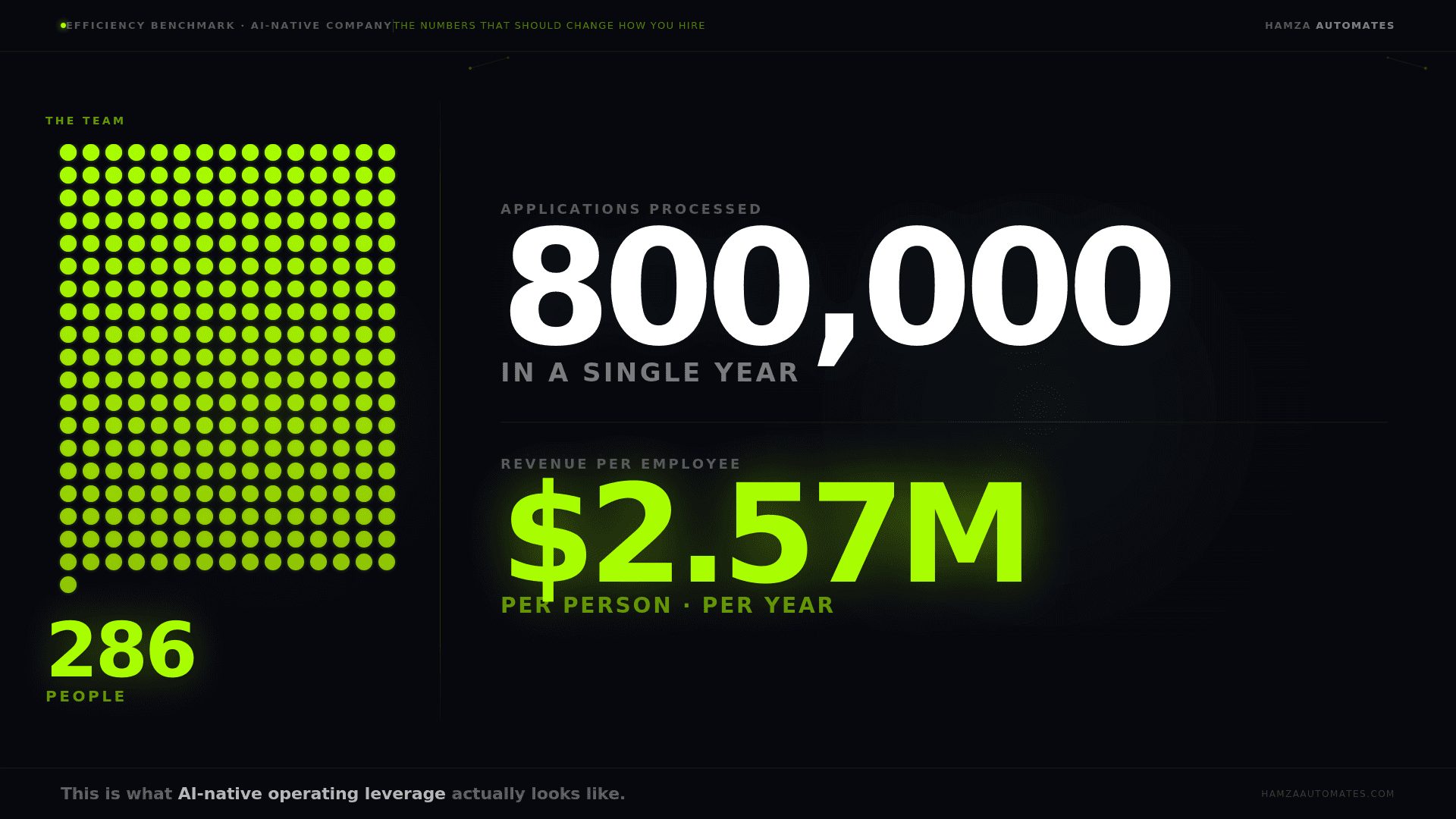
The endpoint of getting this right does not look like the biggest model. It looks like Bending Spoons — $2.57 million of revenue per employee, 90 percent of code AI-generated, humans doing specification and judgment only. They did not get there by owning a special model. They got there by owning a specification discipline that any model can execute. Kimi K3 makes the model cheaper. It does not make the discipline optional.
The Bottom Line
Kimi K3 was the week's biggest story for a reason. A Beijing startup — backed by Alibaba, reportedly heading for a Hong Kong IPO at around a $31.5 billion valuation — shipped the largest open model in history, priced it like a premium product, promised the weights for free, and briefly convinced the market that the era of expensive AI was ending.
The scale of Moonshot itself is part of why the market took it seriously. Alibaba injected $1 billion into Moonshot in 2024 when the startup was valued at $2.5 billion; amid its current funding round that valuation has reportedly climbed to around $31.5 billion. This is not a garage project. It is one of China's well-capitalised "AI Tigers," and the full-weights release on July 27 will be the data point everyone is now waiting on.
The market recovered because it had seen this movie in early 2025 and knew the compute spending would keep flowing. On that narrow question, the recovery was probably right. But the market was answering the wrong question. The real signal is not about chips at all. It is that the model — the thing every AI company spent billions to make proprietary — is turning into a commodity you can download for free.
The chip trade recovered. The proprietary-model moat did not. One of those is a trading headline. The other is a memo every business should have read this week.
For you, that is not a threat. It is the best news of the year, if you are positioned for it. Cheaper, better, more portable models make the input to your business nearly free — which means the entire competitive game moves to what you build on top. Own your process, abstract your model layer, route by task, and measure your ratio. Do that, and it does not matter whether the best model this month is called Fable, GPT, Gemini or Kimi. That is what governance-first, systems-first thinking buys you: immunity to exactly this kind of week.
The weights drop July 27. When they do, the businesses that treat Kimi K3 as one more interchangeable component will quietly get more capable and cheaper. The ones still hunting for a magic model will read the launch coverage, feel the fear of missing out, and change nothing that matters. Boring, disciplined moves compound. Headline-chasing does not — and this was a very loud headline.
Frequently Asked Questions
What is Kimi K3 and who made it?
Kimi K3 is an open-weight AI model from Moonshot AI, a Beijing startup founded by Yang Zhilin and backed by Alibaba. Per Moonshot's documentation, it has 2.8 trillion parameters — the first open-source model in the 3-trillion-parameter class — with a 1-million-token context window and native vision. It uses a sparse Mixture-of-Experts design activating 16 of 896 experts per token. It is live on the Kimi app and API now, with full weights due by July 27, 2026.
Why did it cause a stock market sell-off?
A free, frontier-class model challenges the assumption behind roughly $700 billion in annual hyperscaler AI spending: that capable AI is scarce and expensive. Chip stocks fell globally — the Philadelphia Semiconductor Index into a bear market, the Nikkei over 4 percent — with analysts calling it a "DeepSeek 2.0 moment." Most losses recovered within a day, because the market had learned from the January 2025 DeepSeek episode that AI capex kept flowing regardless.
Is Kimi K3 actually better than Western models?
In part. It ranked first in the Frontend Code Arena, ahead of Claude Fable 5, and matched GPT-5.6 Sol on general text in blind testing. But on broader self-reported benchmarks it beats Opus 4.8 and GPT-5.5 while losing to Fable 5 and GPT-5.6 Sol overall. Best-in-class at front-end coding; strongly competitive elsewhere; not the outright leader.
Should my business switch to Kimi K3 to save money?
Not reflexively, and not before the weights ship on July 27 — a launch-week model is a risk, not a plan. The real move is to make your stack portable so adopting any strong new model is a config change. Then route by task: send front-end generation to K3 if it leads there, and keep other work on whatever wins for that job. Note that Moonshot recommends serving K3 on 64+ accelerators, so self-hosting is a real infrastructure commitment.
Is this really a repeat of the DeepSeek moment?
Structurally similar, economically different. DeepSeek shocked markets by being dramatically cheaper; Kimi K3 is priced like a premium US model, which paradoxically reassured investors that frontier AI still needs serious compute. The viral framing is "DeepSeek 2.0," but the pricing signal is almost the opposite — and that nuance is why the recovery was faster this time.
What does Kimi K3 mean for the AI industry long-term?
It accelerates the commoditisation of the model layer. As open weights match proprietary systems, value shifts from the models to data, hardware, and — most importantly for operators — to whoever can turn a model into a reliable business process. Owning the best model stops being a moat; owning the best process becomes the only one.
What is the one thing I should actually do about this?
Make sure swapping the model under any workflow is a configuration change, not a rewrite, and then measure your Automation Ratio per workflow. Those two moves make every future model release — K3, the next Fable, whatever lands in August — an opportunity you can capture in an afternoon rather than a fire drill. The models will keep getting cheaper and better. Position to benefit from that instead of chasing each one.
Related Reading
Go deeper:
1. You Don't Have an AI Problem, You Have a Systems Problem — why a free frontier model advantages the process, not the model.
2. Stop Chasing the Biggest Model — task-model matching in a world of many specialised open models.
3. CNBC Confirms 30–46% of US Enterprise Tokens Flowing to Chinese Models — the pool Kimi K3 just made larger and better.
4. The AI Agent Platform War — why an abstracted model layer is now non-negotiable.
5. Bending Spoons: $2.57M Revenue Per Employee — the endpoint that owns a discipline, not a model.
6. The Automation Ratio: The Metric That Predicts Survival — the number no sell-off or launch changes.
7. RAMageddon: The Memory Crisis Reshaping AI Costs — why the hardware layer is where value is actually concentrating.
About the Author
Hamza Baig is the founder of Hexona Systems, an AI automation agency operating across six continents, and the AI Automation Institute, where he has trained more than 40,000 entrepreneurs in practical AI systems design.
He has been featured in the GHL Top 50, Yahoo Finance and Brainz Magazine. His work focuses on the gap between what AI can do in a demo and what it reliably ships in production — the Automation Ratio, task-model matching, and governance-first architecture.
Read more analysis on the Hamza Automates blog, get in touch about your automation stack, or follow @hamza_automates on Instagram for daily breakdowns.
Sources: Moonshot AI platform documentation, Tom's Hardware, Quartz/Axios, BigGo Finance, The Next Web, Stocks Down Under, CryptoBriefing, Simon Willison, and market commentary attributed to Goldman Sachs and JPMorgan via secondary reporting. Benchmark, pricing and market figures reflect reporting current as of July 20, 2026 and remain subject to revision; full Kimi K3 weights are scheduled for July 27, 2026.
About
Hamza Baig is the founder of Hexona Systems—an automation agency and softwareplatform that helps thousands of entrepreneurs and business owners implement AI-powered workflows at scale.