30-46% of US Enterprise AI Tokens Are Now Flowing to Chinese Models.
US frontier AI labs raised prices in 2026 at exactly the moment Chinese open-weight models reached near-frontier performance at deeply discounted prices.





“US frontier AI labs raised prices in 2026 at exactly the moment Chinese open-weight models reached near-frontier performance at deeply discounted prices. The market did what markets do. Now CNBC has the data: 30 to 46% of US enterprise API tokens are flowing to Chinese models. GLM-5.2 grew 80x in customers in its first week on Vercel. This is not a geopolitical story. It is a pricing story. And it changes what your automation stack should look like.”
The CNBC Investigation: What the Data Actually Says
On July 7, 2026, CNBC published a major investigation confirming what developer communities had been discussing for months: Chinese AI models now account for between 30% and 46% of the enterprise API token usage flowing through US developer platforms. The CNBC investigation drew on platform-level data from OpenRouter and Vercel, the two largest AI gateway platforms serving US enterprise developers.
The specific data points from the investigation:
- Through OpenRouter, Chinese model share has been above 30% of all gateway tokens every week since February 8, 2026, rising as high as 46%
- The 12-month average prior to 2026 was 11% Chinese model share; in the first half of 2025, it had been as low as 4.5%
- Through Vercel, GLM-5.2 saw daily token volume grow approximately 27 times and customer count grow approximately 80 times in its first full week after launch
- Justin Summerville at OpenRouter: open-source Chinese models are 60 to 90% cheaper than leading Anthropic and OpenAI models
- Harpreet Arora at Vercel: “Price is doing the work here. When a task doesn’t need the best model, teams are beginning to route it to the cheapest one that’s good enough, and the recent wave of models coming out of China is winning that trade”
The 46% peak figure is the one that matters most. In the weeks it occurred, nearly half of all US enterprise AI gateway token usage was going to Chinese-origin models. That is not a niche developer preference. It is a market-level signal about how price competition in AI is resolving.
Why This Happened: The Tokenmaxxing Correction Meets Chinese Model Quality
The Q2 2026 Enterprise AI Budget Crisis
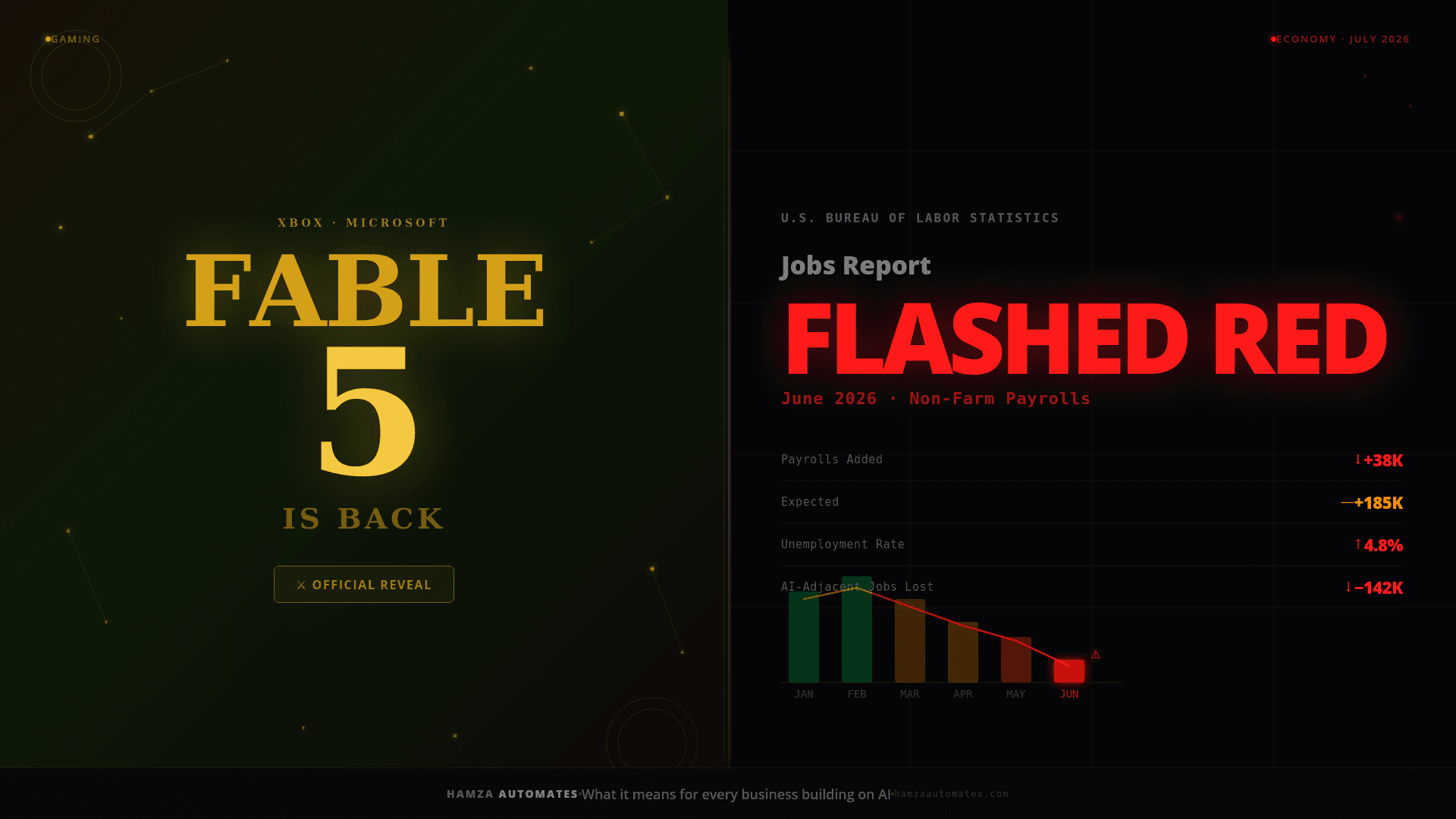
The CNBC data is the output of a two-quarter market correction. As the RAMageddon analysis described, the structural economics of AI infrastructure costs are rising due to the global memory shortage. Western frontier AI labs passed those rising costs to enterprise customers in 2026: GPT-5.5 doubled GPT-5.4’s pricing, Fable 5 launched at $10/$50, Gemini 3.5 Flash released at 3x its predecessor’s price.
At the same time, enterprises were experiencing the tokenmaxxing correction: developers using frontier models for every task without cost controls burned through annual AI budgets in months. Uber burned through its 2026 annual AI budget in four months. Lindy’s CEO moved 100% off Claude to DeepSeek after costs became unsustainable.
The Chinese Model Quality Threshold
The pricing correction alone would have produced model switching to lower-tier Western alternatives, not to Chinese models specifically. The additional factor: Chinese open-weight models reached near-frontier performance at exactly the right moment. GLM-5.2 scored 62.1% on SWE-bench Pro versus GPT-5.5 at 58.6%. It actually outperformed GPT-5.5 on the benchmark most relevant to enterprise coding automation, at $1.40/$4.40 per million tokens versus $2.50/$15 for GPT-5.5. The performance gap between ‘good enough Chinese model’ and ‘frontier Western model’ crossed a threshold in mid-2026 where cost-sensitive enterprise routing decisions became rational market behaviour rather than compromise.
Yacine Jernite at Hugging Face described the structural shift plainly: “We are seeing companies increasingly motivated to turn to cheaper AI stacks they can control and adapt themselves, and given the state of open-source and open-weight models that often means leveraging Chinese options.”
The Advisor Model Technique
The routing pattern that is driving the Chinese model share surge is increasingly called the advisor model technique: a cheap open-weight model (often GLM-5.2, DeepSeek V3, or Qwen) handles the bulk of tasks as the default tier. When the default model’s output fails a quality threshold or the task is explicitly flagged as requiring frontier performance, the workflow escalates to a Western frontier model (Sonnet 5, GPT-5.6 Terra, or Gemini 3.5 Pro). This is the enterprise-scale implementation of the two-tier model strategy I have been recommending in this series.
The advisor model technique is the practical manifestation of the task-model matching argument: not every task requires a $10/$50 frontier model. Most high-volume enterprise tasks — summarisation, code completion, data extraction, customer support drafting, classification — are within the performance envelope of models that cost 60 to 90% less. The Chinese open-weight models are winning the cost-performance competition for that tier.
The Counter-Consideration: What the CNBC Story Underweights
The CNBC investigation is accurate on the data and correct on the economic rationale. It underweights three considerations that matter for enterprise deployment decisions.
Data Jurisdiction Is Not a Minor Issue
Direct API calls to Z.ai, DeepSeek, or Moonshot AI route through Chinese-jurisdiction servers. For regulated data categories — healthcare, financial, legal, government — routing customer data or internal business intelligence through servers under Chinese jurisdiction typically violates data residency requirements, enterprise data governance policies, and potentially applicable law.
The safe path for enterprises that need Chinese model economics without data jurisdiction risk: Azure AI hosts DeepSeek and Qwen models under Microsoft’s data processing agreements, which provide US data residency guarantees. Cloudflare Workers AI provides similar infrastructure guarantees. The cost advantage narrows when routing through these intermediaries, but does not disappear entirely.
Tool-Call Schema Reliability Gaps
Enterprise AI automation workflows that rely on structured tool calls and function calling are where Chinese model reliability gaps remain most visible. GLM-5.2’s strong SWE-bench Pro performance on code generation does not fully translate to consistent schema adherence in complex multi-step agentic workflows. Enterprise teams that have tested Chinese models in production agentic pipelines report higher error rates on schema validation than on pure benchmark comparisons would suggest.
This is the nuance that the automation ratio framework captures: benchmark scores measure single-turn task performance. Production automation ratio measures the percentage of outputs that ship without human correction across your actual multi-step workflow. Those are different numbers. Run your own automation ratio comparison across both models before routing production agentic workflows to the cheaper alternative.
Content Restrictions on Politically Sensitive Topics
Chinese-origin models apply content restrictions that reflect Chinese regulatory requirements, specifically including restrictions on politically sensitive topics, historical events, and content critical of the Chinese government or Communist Party. For most enterprise automation workflows (coding, summarisation, data extraction), these restrictions are irrelevant. For content generation, research, or customer-facing workflows that might touch any of these areas, they are not.
Trump Cancels AI Executive Order Signing Ceremony: What It Means
On July 8, President Trump abruptly cancelled a scheduled Oval Office signing ceremony for a new AI executive order, per the Build Fast with AI July 8 reporting. Trump told reporters he did not want to do anything that would interfere with the US competitive position in AI, citing concern that signing would “undermine America’s lead over China.”
The specific irony of the timing: Trump cancelled an AI regulation signing on the same day CNBC confirmed that 30-46% of US enterprise AI tokens are flowing to Chinese models. The competitive lead Trump is trying to protect is being eroded not by regulation but by Western frontier AI labs’ pricing decisions and Chinese model quality improvements.
What Remains on the Governance Calendar
The August 1 deadline under the June 2 executive order remains in force regardless of the signing ceremony cancellation. That deadline requires the NSA and CISA to deliver the classified frontier model benchmarking process and the voluntary pre-release framework. Per the full governance calendar, the August 1 deliverables include: the framework for determining which models qualify as covered frontier models, the repeatable pre-release review process for future model releases, and the international access rules for frontier AI models.
The practical consequence for businesses: the August 1 deadline is not political. It is statutory. Even if the White House does not announce it with a ceremony, the classified framework that governs Fable 5 access restrictions, GPT-5.6 broad release, and Gemini 3.5 Pro’s competitive position will be delivered on or around August 1. Watch for model access changes in the first week of August, not for press releases.
Thrive Holdings: $2 Billion to Transform Professional Services With AI
Thrive Holdings, a holding company started by OpenAI investor Thrive Capital one year ago, is raising approximately $2 billion from Altimeter Capital, D1 Capital Partners, and SoftBank, per reporting from The Information via AI Weekly. The strategy: acquire controlling stakes in accounting, legal, and other professional services firms and transform them with AI.
This is the most consequential AI business model story of the week for the professional services market. It represents a different implementation of the outcome ownership thesis: rather than an AI automation business selling outcomes to professional services firms, Thrive Holdings is buying the professional services firms and implementing AI transformation from inside.
The thesis is straightforward: accounting and legal firms generate enormous revenue from knowledge work that AI can increasingly perform. Their organic AI adoption is constrained by regulatory requirements, partner governance structures, and client trust requirements. A holding company with controlling stakes can implement AI transformation across multiple firms simultaneously, capturing margin expansion that individual firms cannot implement quickly enough under their own governance structures.
$2 billion targeting controlling stakes at firms with combined revenues in the tens of billions. Altimeter, D1, and SoftBank participation. This is institutional conviction that the professional services AI disruption argument is a fundable investment thesis, not just a theoretical concern. The professional services firms that are not actively transforming with AI are now facing not just organic AI competition, but well-capitalised acquisition targets for competitors who will transform them faster than their own governance allows.
Alberta Government Uses Claude for Cybersecurity: The Case Study Worth Reading
Anthropic published on July 6, 2026 a case study documenting the Government of Alberta’s use of Claude to find and fix cybersecurity vulnerabilities across government systems, per the Anthropic newsroom. Alberta is the first Canadian provincial government to publish a formal AI cybersecurity case study.
The workflow is directly relevant for any organisation with significant custom code: Claude scans government code repositories for vulnerabilities, prioritises findings by severity and exploitability, generates candidate patches for high-priority issues, and produces audit-ready remediation documentation. Alberta reported significantly reduced mean time to remediation compared to its previous manual review process, with AI-assisted analysis enabling security staff to review and validate more findings in the same period.
The timing matters: the Alberta case study arrived one week after the JADEPUFFER disclosure covered in the July 8 popular article, and in the same news cycle as the Five Eyes warning that AI cyberattacks are months away. Anthropic is deliberately positioning Claude’s defensive security capability as the response to the offensive AI security threat. Project Glasswing (finding 23,019 vulnerabilities in 1,000 open-source codebases), the Alberta deployment, and Patch the Planet (with Trail of Bits and HackerOne) are the programme components of that positioning.
What This Week’s Stories Mean for Businesses Building on AI Automation
Implement the Advisor Model Architecture Now, Before the September 1 Pricing Change
The CNBC data confirms what the task-model matching framework has been recommending: not every task requires frontier pricing. The advisor model architecture — cheap open-weight model as default, frontier model as exception on escalation — is what 30-46% of US enterprise token usage has already moved to. The August 31 expiry of Sonnet 5’s $2/$10 introductory rate is the deadline for building this architecture before the September 1 pricing reset. Build the routing logic now, test it against your actual automation ratio, and have the two-tier system in production before the introductory rate expires.
The Data Jurisdiction Question Requires a Decision Before Adoption
If your workflows handle regulated data, customer data subject to privacy law, or sensitive business intelligence: decide your data jurisdiction position before evaluating Chinese model economics. The answer for most regulated industries is Azure AI or Cloudflare Workers AI, where Chinese model weights run on US infrastructure under US data processing agreements. The answer for unregulated, non-sensitive workflows is that Chinese models through direct API access may be the economically rational choice at your volume and task type.
Watch the Governance Calendar, Not the Headlines
Trump cancelling a signing ceremony generates headlines. August 1 is a statutory deadline that generates model access changes without headlines. The White House voluntary standards framework, the classified frontier model benchmarking process, and the international access rules for frontier AI are all being delivered regardless of whether there is a public ceremony attached. Build your model access contingency planning around August 1 as the next structural date, not around press release timing.
The Governance Calendar Through August 2026: Every Key Date
The complete timeline of governance and commercial dates through August 2026:
- July 8 (today): Fable 5 moves to usage credits only ($10/$50 per million tokens); Anthropic ID verification via Persona takes effect
- July 15: China AI companion law enforcement deadline; Doubao and Qwen agent features shut down in China; Doubao user agent data export window closes
- July 15: Claude Science AI for Science grants application deadline
- July 31: Claude AI Science grant award notifications sent
- August 1: Formal NSA/CISA deadline to deliver classified frontier model benchmarking process and voluntary pre-release framework under the June 2 executive order
- August 1: Deadline triggers formal framework for covered frontier model definition, repeatable pre-release review, and international access rules
- August 31: Claude Sonnet 5 introductory pricing ($2/$10) expires; standard pricing ($3/$15) takes effect with 1.0-1.35x tokeniser multiplier
- September (target): OpenAI IPO roadshow
- October (target): Anthropic IPO roadshow
- Q3 2026: Grok 4.5 public release; Gemini 3.5 Pro general availability (no confirmed date); GPT-5.6 broad API access
The Bottom Line on July 10, 2026
The CNBC data on Chinese model adoption is the week’s most important market signal. It confirms that the AI agent platform war’s prediction — that tooling churn and cost competition would restructure the AI model market — is happening faster than most organisations anticipated. The structural response from Western frontier AI labs is defending the top-tier performance position while Chinese open-weight models capture the middle tier. That market structure is now visible in the data.
For businesses building automation: the advisor model architecture is now the market-standard approach, validated by where 30-46% of enterprise token volume has gone. Implement it deliberately, with data jurisdiction and tool-call reliability decisions made before routing production workflows, rather than discovering the trade-offs after the fact in your credit billing.
The automation ratio framework remains the measurement tool for making these decisions well: measure which model produces higher proportions of output that ships without human correction on your specific task types, at the cost structure your margin can sustain. That answer is available to you today. Run the test.
Frequently Asked Questions
Is it safe to use Chinese AI models for enterprise work?
It depends on your data type and jurisdiction requirements. Per the CNBC investigation, for unregulated, non-sensitive workflows, Chinese open-weight models available through Azure AI or Cloudflare Workers AI (running on US infrastructure under US data processing agreements) are a safe and economically rational choice. For regulated data categories (healthcare, financial, legal, government), direct API calls to Chinese providers route through Chinese-jurisdiction servers and typically violate data residency requirements. The safe infrastructure path is Azure AI or Cloudflare for regulated data.
What is the advisor model technique and how do I implement it?
The advisor model technique routes tasks to the cheapest model that achieves your target automation ratio, and escalates to a more capable (and expensive) frontier model only when the default model’s output fails a quality threshold. Implementation: define your quality threshold (minimum acceptable automation ratio), configure a cheap open-weight model (GLM-5.2, DeepSeek V3, Qwen) as your default routing tier, add quality evaluation logic that triggers escalation to a Western frontier model (Sonnet 5, GPT-5.6 Terra) when the default output fails the threshold, and monitor cost per successful output rather than cost per token. The no-code automation workflow guide covers the routing architecture in detail.
Why did Trump cancel the AI executive order signing ceremony?
Trump cancelled a scheduled signing ceremony citing concern that signing an AI regulation would “undermine America’s lead over China.” The proposed order had emerged from banking and financial sector pressure over AI cybersecurity risks. The August 1 statutory deadline under his June 2 executive order remains in force regardless of the cancellation: NSA and CISA must deliver the classified frontier model benchmarking process and voluntary pre-release framework by August 1 whether or not there is a public signing ceremony.
What is Thrive Holdings and why does it matter for professional services?
Thrive Holdings is a holding company raising $2 billion from Altimeter, D1 Capital, and SoftBank to acquire controlling stakes in accounting, legal, and other professional services firms and transform them with AI. Per The Information via AI Weekly, the thesis is that professional services firms’ AI adoption is constrained by their own governance structures, and a controlling shareholder can implement AI transformation faster than organic adoption allows. This creates a new category of AI disruption risk for professional services firms: not just AI tools eroding their revenue, but well-capitalised acquirers buying them and implementing AI transformation they could not implement themselves.
When does Claude Sonnet 5’s introductory pricing end and what changes?
Claude Sonnet 5’s introductory pricing of $2 per million input tokens and $10 per million output tokens expires August 31, 2026. Standard pricing from September 1 is $3 input and $15 output — the same nominal per-token rate as Sonnet 4.6. However, Sonnet 5 uses a new tokeniser that generates 1.0 to 1.35 times more tokens from the same text. At standard pricing with the tokeniser difference, effective costs for tokeniser-sensitive workloads may be 10 to 35% higher than the same nominal rate implies. Benchmark your Sonnet 5 token consumption before August 31 and recalibrate your cost models for September 1 pricing.
Related Reading From This Series
Stop Chasing the Biggest Model — the task-model matching framework that explains why the advisor model technique works
The Automation Ratio — how to measure which model actually performs better on your specific workflow, not on benchmarks
Alibaba’s Distillation Attack — the IP war context behind Chinese model adoption and provenance considerations
RAMageddon: Why AI Is Getting More Expensive — the infrastructure cost pressure driving Western frontier AI pricing up and Chinese model adoption
The ‘AI Business’ Advice Is Wrong — why Thrive Holdings validates the outcome ownership thesis over generic AI services
JADEPUFFER and the Autonomous AI Security Crisis — the security context for deploying Chinese models with uncontrolled data routing
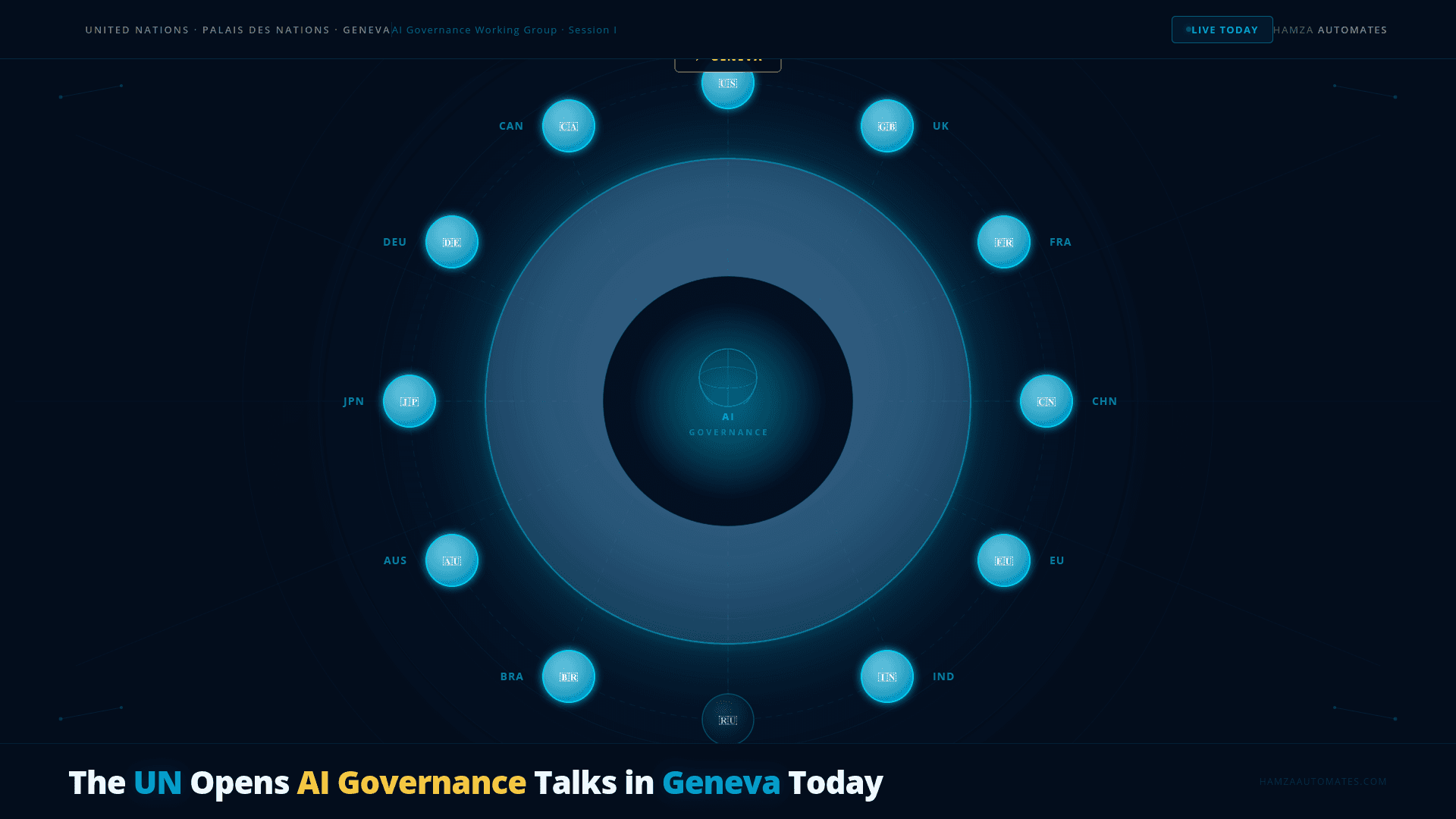
The Geneva UN AI Governance Summit — the multilateral framework that will govern Chinese model distribution in 12-24 months
About the Author: Hamza Baig is the founder of Hexona Systems, an AI automation agency serving clients across six continents, and creator of the AI Automation Institute, where over 40,000 entrepreneurs have learned to build and scale automation businesses. He has been featured in GHL Top 50, Yahoo Finance, and Brainz Magazine. Follow him at @hamza_automates | Read more articles | Work with Hamza
About
Hamza Baig is the founder of Hexona Systems—an automation agency and softwareplatform that helps thousands of entrepreneurs and business owners implement AI-powered workflows at scale.