AI Voice Agents for Appointment Booking (2026 Guide)
How AI voice agents answer calls and book appointments 24/7, what they cost per minute, how to set one up and where they work best. Practical 2026 guide.





Part of AI Automation Agency: What We Build and How It Works
For clinics, salons, trades and local service businesses, the phone is still where most bookings happen, and every missed call is a booking that probably went to a competitor. The front desk is busy with the customer in front of them, it’s lunchtime, or it’s 8pm on a Sunday, and the call goes to a voicemail nobody returns in time.
An AI voice agent for appointments answers every call, has a natural spoken conversation, checks your real availability and books the appointment, at any hour. This guide explains how they work, what a good call sounds like, what they really cost per minute, how to set one up and where they make the most sense.
Quick answer: An AI voice agent answers your business line, understands what the caller wants, checks your calendar or booking system, books, reschedules or cancels appointments, sends an SMS confirmation and passes urgent or complex calls to your team. Usage typically costs about $0.08 to $0.30 per minute all-in, and a custom build with booking and CRM integration usually costs $5,000 to $20,000. They pay off fastest for businesses that miss calls during busy hours or after hours.
What an AI voice agent actually does
A voice agent is an AI receptionist that talks on the phone. Unlike an old phone menu (“press 1 for bookings”), the caller just speaks normally and the agent responds in a natural voice, usually within about a second.
For appointment booking, a well-built voice agent handles:
- New bookings: finds out what the caller needs, offers available times and books the slot.
- Rescheduling and cancellations: finds the existing appointment and moves or cancels it.
- Common questions: opening hours, location, parking, prices you’ve approved, what to bring.
- Confirmations and reminders: sends an SMS or email confirmation and reminders before the visit.
- Handoffs: transfers urgent, sensitive or complex calls to a person, or takes a detailed message.
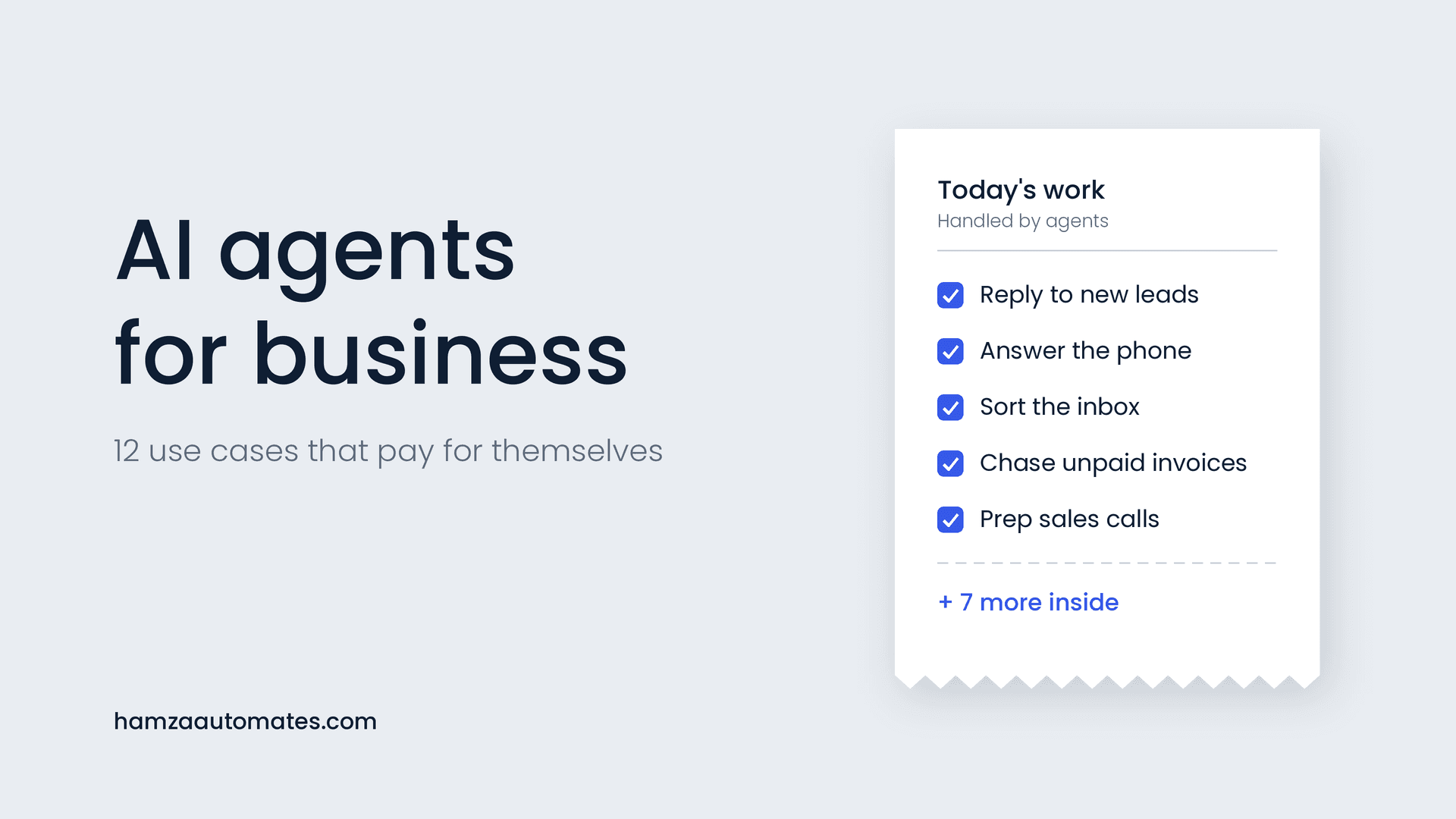
Because it takes actions in your systems rather than just talking, a booking voice agent is a type of AI agent. For more examples of where agents pay off, see 12 AI agent use cases that pay for themselves.
How it works behind the scenes
Every call runs through the same loop, over and over, within each turn of the conversation:
Telephony. The call arrives on your existing number (forwarded) or a new number connected to the voice platform.
Speech-to-text. The caller’s words are transcribed in real time.
The AI model. A language model works out what the caller wants and decides what to say or do next, following the instructions and business information you’ve approved.
Tools. When needed, the agent calls your booking system, calendar or CRM to check availability, create the appointment or look up an existing one.
Text-to-speech. The reply is spoken back in a natural voice.
After the call, a workflow sends the confirmation, logs the summary and transcript in your CRM and alerts your team if anything needs a human.
What a good booking call sounds like
Here’s an illustrative example for a dental clinic, received on a Sunday evening. Notice that the agent keeps each turn short, confirms details back and never gives medical advice.
Caller: Hi, I’d like to book a cleaning. I haven’t been to you before.
Voice agent: Welcome! I can help with that. Can I get your full name?
Caller: Sara Ahmed.
Voice agent: Thanks, Sara. For new patients, we have Tuesday at 9:30am or Wednesday at 4pm. Do either of those work?
Caller: Tuesday morning is good. Also, I’ve got a bit of tooth pain on one side.
Voice agent: I’ll note that for the dentist so they can take a look on Tuesday. If the pain gets worse or you notice swelling before then, please call back during office hours or seek urgent care. Is the number you’re calling from the best one for your confirmation?
Caller: Yes, that’s fine.
Voice agent: Perfect. You’re booked for Tuesday at 9:30am for a new-patient cleaning. I’ve just sent a text with the details and a short form to fill in before your visit.
The call takes under two minutes, the appointment is in the system and the clinic team sees the note about tooth pain first thing Monday. The details are illustrative; your agent should only offer real slots from your calendar and follow the escalation rules you set.
What an AI voice agent costs
There are two parts to the cost: building it and running it.
Running cost: priced per minute
Voice platforms such as Retell AI and Vapi advertise headline rates of roughly $0.05 to $0.07 per minute. That figure is usually only the platform fee. Speech-to-text, the AI model, the voice and the phone line are charged on top, so a realistic all-in cost for a standard setup is roughly $0.08 to $0.15 per minute, rising to $0.30 or more with premium voices and larger models. Phone numbers typically add a few dollars a month each.
Here’s a worked example for a clinic handling 1,000 calls a month with an average length of three minutes:
- 1,000 calls × 3 minutes = 3,000 minutes
- 3,000 minutes × $0.15 per minute = about $450 a month in usage
Using a smaller AI model for routine calls and keeping the agent’s instructions concise both bring the per-minute cost down, which matters at high volume.
Build cost
A custom voice agent with booking, CRM and SMS integration typically costs $5,000 to $20,000 to build, depending on how many call types it handles, which booking system you use and how many locations or staff calendars it manages. My AI automation cost guide covers the full build, run and maintain breakdown.
Cost component
What it covers
Typical range
Build (one-time)
Call flows, voice and prompt design, booking and CRM integrations, testing
$5,000 to $20,000
Voice usage
Platform, speech-to-text, AI model, text-to-speech and telephony
$0.08 to $0.30 / minute
Phone numbers
Local or toll-free numbers on the voice platform
A few dollars / month each
SMS confirmations
Confirmation and reminder texts
Usage-based
Maintenance
Monitoring, script and FAQ updates, fixes
$500+ / month, or ad hoc
Does it pay for itself? A worked example
Rather than comparing cost per minute with a receptionist’s salary, compare it with the revenue you’re currently losing to missed calls. Here’s an illustrative example; plug in your own numbers and use my ROI framework to track the result.
- Missed calls during busy hours and after hours: 15 a week (about 65 a month)
- Share of those callers who would have booked: 30% (about 19 bookings)
- Average value of a booking: $150
- Revenue recovered: 19 × $150 = about $2,900 a month
Against roughly $450 a month in usage plus a $500 maintenance retainer, that leaves about $1,950 a month, enough to pay back a $10,000 build in around five months, before counting the staff time saved on routine calls, reschedules and reminders. Your result depends heavily on how many calls you currently miss, so measure that first. Most phone systems can show missed and unanswered calls by hour.
Which businesses benefit most
Business type
Typical use
Why it fits
Dental and medical clinics
New-patient bookings, reschedules, after-hours calls
High call volume, clear appointment types
Salons and spas
Bookings and rebookings by service and staff member
Front desk is busy with in-person clients
Home services and trades
Job requests, quotes, scheduling site visits
Owners on job sites can’t answer the phone
Real estate
Viewing bookings and buyer or seller enquiries
Leads call outside office hours
Legal and professional services
Consultation bookings and intake questions
Every new client call is high value
Fitness and education
Trial classes, consultations and schedule questions
Repetitive questions at peak times
If you work in real estate, my guide to marketing automation for real estate agencies shows where a voice agent fits alongside your other automations.
How to set one up: six steps
Measure your missed calls. Pull a month of call data by hour and day. This is your baseline and your business case.
List your call types. New booking, reschedule, cancellation, pricing question, emergency and so on. Start with the three or four that make up most of your calls.
Write the rules. For each call type, define what the agent can do on its own, what information it needs and when it must hand off to a person.
Connect your systems. Booking system or calendar, CRM, SMS and call transfer. Make sure the agent sees real-time availability so it never double-books.
Test with real scenarios. Have staff call with every type of request, including the difficult ones: strong accents, background noise, angry callers and people who change their mind mid-call.
Launch gradually. Start with after-hours and overflow calls, review transcripts weekly and expand to more hours once it performs well.
Common mistakes to avoid
Long, robotic answers. Spoken conversations need short turns. If the agent talks in paragraphs, callers interrupt or hang up.
No real-time calendar access. An agent that can’t see live availability will offer slots that are already taken. This is the most common cause of booking errors.
No escape hatch. Callers should always be able to reach a person or leave a message. Emergencies and complaints should go to a human immediately under clear rules, rather than relying on someone reviewing transcripts later. I explain why in Your Human in the Loop Is a Receipt, Not a Control.
Letting it improvise. The agent should only state prices, policies and information you’ve approved. Medical, legal or financial questions should be noted and passed on, never answered on the spot.
Forgetting follow-up. Callers who don’t book on the first call are still warm leads. Connect the voice agent to an SMS and email follow-up sequence, as covered in AI Automation for Customer Follow-Up.
Disclosure, recording and compliance
Tell callers they’re speaking with an AI assistant at the start of the call. It builds trust, and the EU AI Act’s transparency rules require people to be told when they’re interacting with an AI system. If you record calls, follow the consent rules where you and your callers are; some U.S. states require every party’s consent. Outbound AI calls carry stricter rules: in 2024 the FCC ruled that AI-generated voices count as “artificial” voices under the TCPA, so automated outbound calls generally need prior consent. Healthcare businesses also need to make sure their voice platform and data handling meet privacy requirements such as HIPAA. This isn’t legal advice, so check the rules for your industry and location.
Voice agent or chatbot?
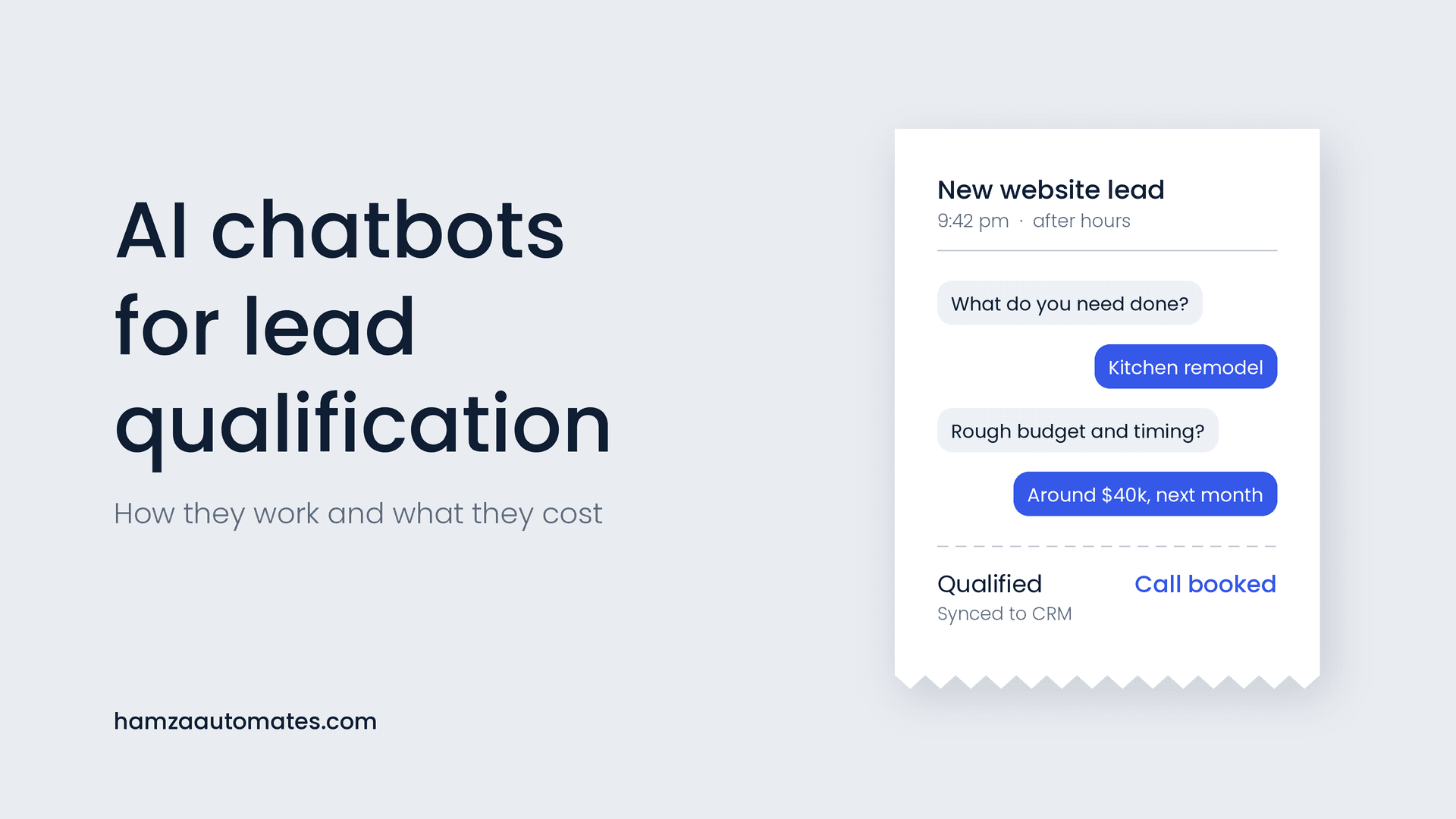
If most of your leads arrive by phone, start with a voice agent. If they arrive through your website, WhatsApp or social DMs, start with a lead qualification chatbot. Many businesses end up running both on the same “brain,” so callers and chatters get the same answers and every booking lands in one calendar.
Want an AI receptionist that books appointments for you?
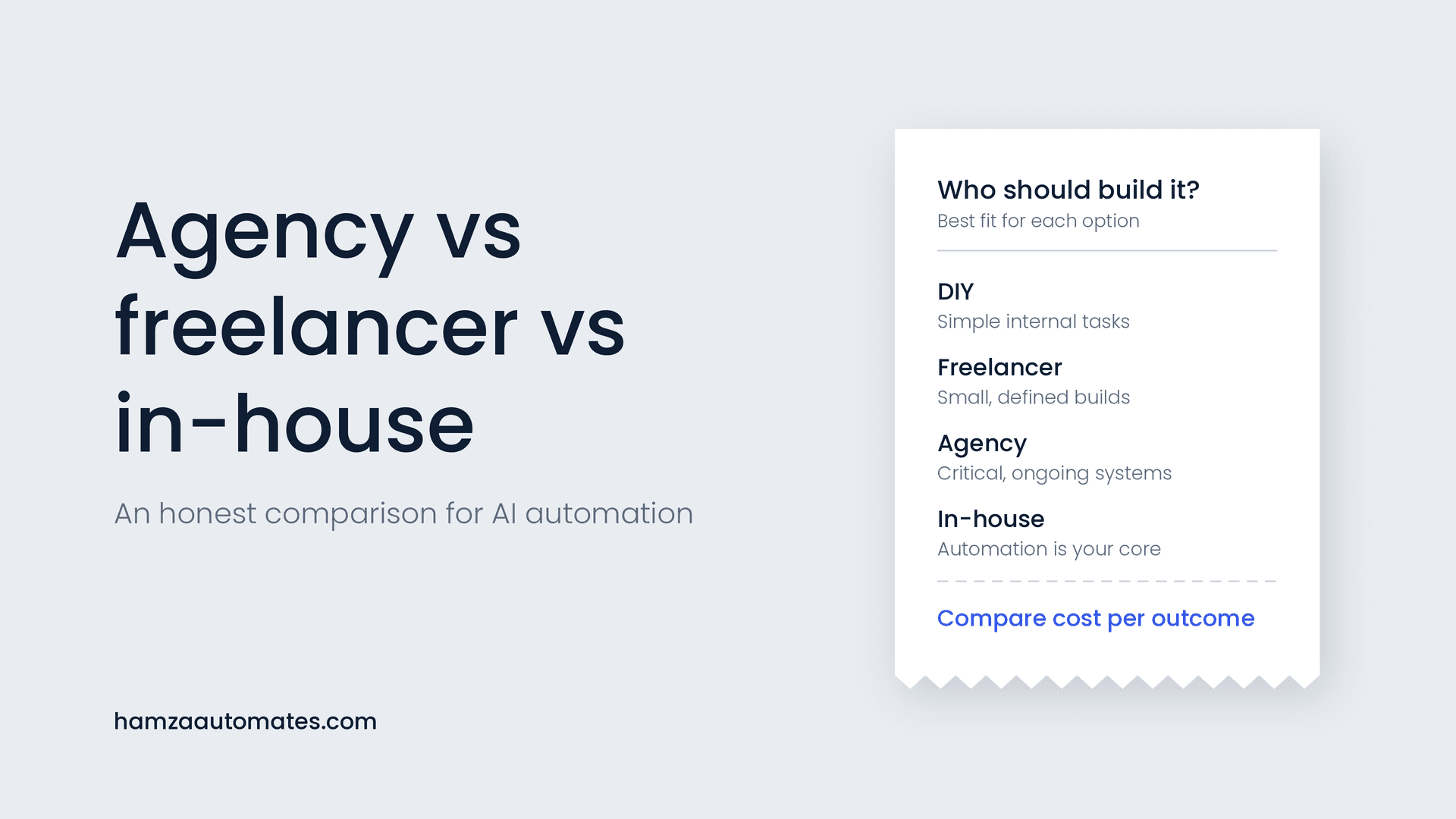
At Hexona Systems, we build AI voice agents that answer your calls, book directly into your calendar and hand off to your team when it matters. See what we build as an AI automation agency, or book a call and we’ll look at your missed-call data together. Comparing providers? Use my 10 questions to ask before you hire an AI automation agency, or read agency vs freelancer vs in-house to decide who should build it.
Frequently asked questions
Can an AI voice agent really book appointments?
Yes. When connected to your booking system or calendar, an AI voice agent can check live availability, book, reschedule and cancel appointments, and send SMS or email confirmations, all during the call.
How much does an AI voice agent cost per minute?
Platforms advertise around $0.05 to $0.07 per minute, but that usually covers only the platform fee. With speech recognition, the AI model, the voice and telephony included, expect roughly $0.08 to $0.15 per minute for a standard setup and $0.30 or more with premium options.
Will callers know they’re talking to AI?
They should. Disclosing it at the start of the call is good practice, builds trust and is required in some places. Modern voice agents sound natural enough that most callers are comfortable continuing once they know.
Can an AI voice agent use my existing phone number?
Usually, yes. Most setups forward calls from your existing number to the voice agent, either for all calls, after hours only, or when your team doesn’t answer within a set number of rings.
What happens if the AI voice agent can’t help a caller?
A well-built agent transfers the call to a staff member, takes a detailed message or schedules a callback, and logs the full transcript in your CRM so your team has the context.
About the author: Hamza Baig is the founder of Hexona Systems, an AI automation agency and software platform, and the creator of the AI Automation Institute, where more than 30,000 students have learned to build with AI and automation. He has been featured in Yahoo Finance, CEO Weekly and Brainz Magazine. Follow him on X and LinkedIn.
About
Hamza Baig is the founder of Hexona Systems—an automation agency and softwareplatform that helps thousands of entrepreneurs and business owners implement AI-powered workflows at scale.