AI Automation Agency vs Freelancer vs In-House (2026)
Should you hire an AI automation agency, a freelancer or build in-house? An honest comparison of costs, risks and speed, plus a 12-month cost scenario.





Once you’ve decided to automate part of your business with AI, the next question is who should build it. You can do it yourself, hire a freelancer, work with an AI automation agency or hire someone in-house. Each option can be the right one, and each can be an expensive mistake in the wrong situation.
I run an AI automation agency, so you might expect me to say “hire an agency.” I won’t, because for plenty of projects an agency is the wrong choice. This guide compares all four options honestly on cost, speed, risk and fit, works through a 12-month cost scenario and gives you a simple way to decide.
Quick answer: Do it yourself for simple, internal, low-stakes workflows. Hire a freelancer for small, clearly defined builds where you can manage the project. Choose an AI automation agency for customer-facing or business-critical systems that need testing, documentation and ongoing support. Hire in-house once automation is core to your operations and you have enough work to keep someone busy full-time. Many businesses end up combining two of these.
The four options at a glance
DIY
Freelancer
Agency
In-house
Upfront cost
Lowest (tools only)
Low to medium
Medium to high
High (recruiting + salary)
Ongoing cost
Your time
Hourly, as needed
Retainer or as needed
Full salary and overheads
Speed to start
Immediate
Days to weeks
Weeks
Months to hire
Range of skills
Yours
One person’s
A team’s
One person’s, growing
Continuity risk
High
High
Low
Medium (if they leave)
Best for
Simple internal tasks
Small, defined builds
Critical, ongoing systems
Automation as a core function
Option 1: Do it yourself
No-code tools like n8n, Make and Zapier have made it possible for non-technical founders to build useful automations themselves. If you want to try, my step-by-step guide to building a no-code automation workflow walks you through it.
Pros: Cheapest in cash terms, often under $100 a month in software. You learn how your own systems work, and you can start today.
Cons: Your time isn’t free, and the learning curve for AI features, error handling and integrations is steep. DIY builds often work in testing and then fail quietly with real data. When they break, you’re the only one who can fix them.
Choose DIY when the workflow is internal, low-stakes and simple, such as sending yourself a daily summary or moving form submissions into a spreadsheet, and you enjoy building.
Option 2: Hire a freelancer
Freelance automation builders range from beginners who finished a course last month to highly experienced specialists. Rates vary widely, and in my experience experienced AI automation freelancers commonly charge somewhere around $50 to $150 or more an hour, or a fixed price per project.
Pros: Usually the cheapest outside option for a well-defined project. You get direct contact with the person doing the work, and good freelancers can be very fast.
Cons: One person can only know so much. Few freelancers are equally strong at process design, AI, integrations, security and testing. You also carry the continuity risk: if your freelancer gets busy, changes career or simply disappears, whoever inherits the system has to learn it from scratch. And you have to manage the project yourself.
Choose a freelancer when the project is small and clearly scoped, the system isn’t business-critical and you’re comfortable managing the work. Insist on three things: a written scope, documentation at handover, and everything built in accounts you own.
Option 3: Work with an AI automation agency
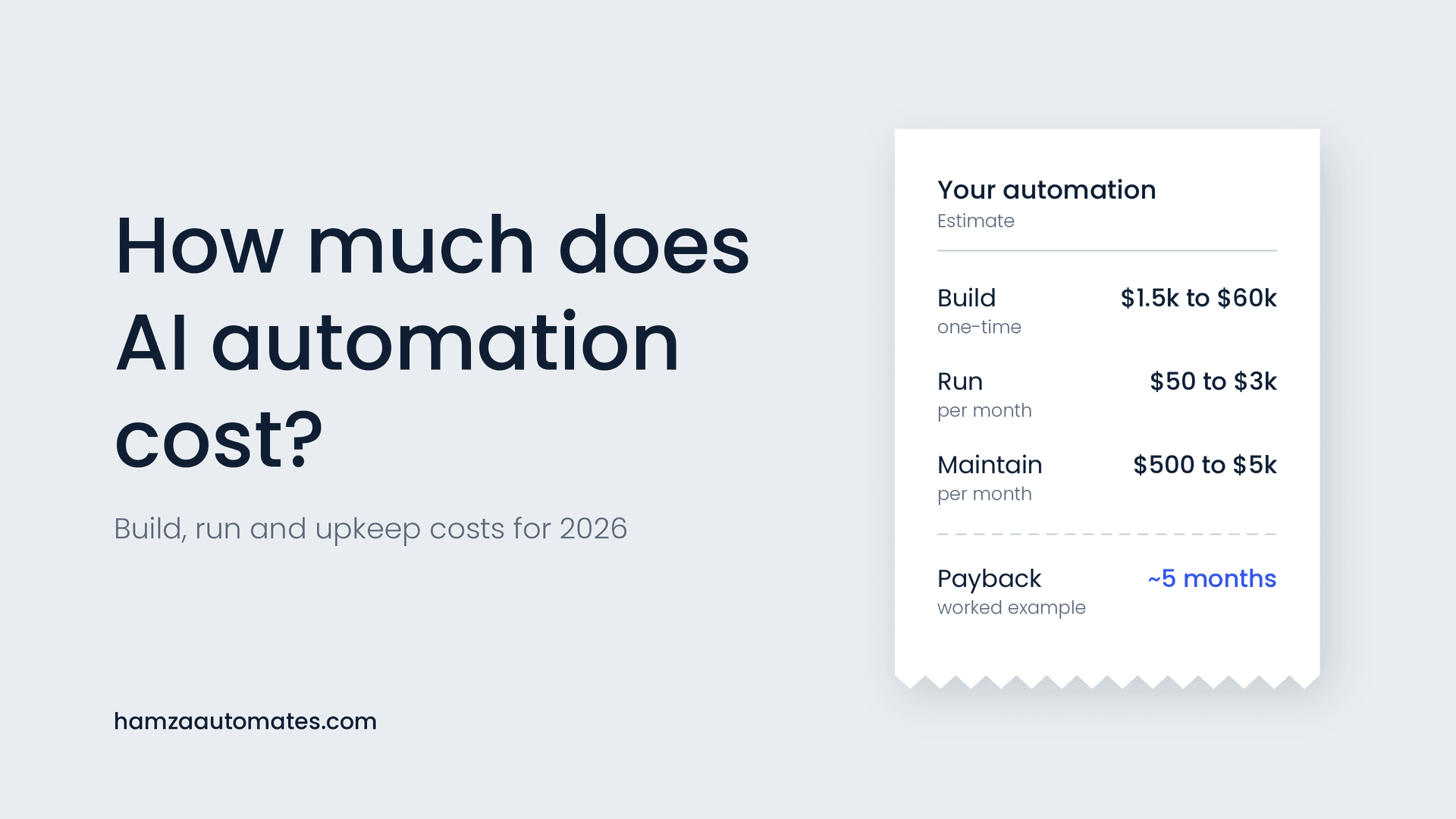
An agency brings a team rather than one person, typically covering process design, AI and workflow building, integrations, testing and ongoing support. Projects are usually priced per project, with an optional maintenance retainer. My AI automation cost guide breaks down typical ranges, from around $1,500 for a simple AI-assisted workflow to $60,000 or more for multi-step AI agents.
Pros: Broader skills, a defined process, testing and documentation, and someone accountable for keeping the system running. Lower continuity risk, because the knowledge sits with a team. Agencies have also usually solved your problem before for other clients, which saves you paying for their learning.
Cons: More expensive than a freelancer for the same build. Quality varies enormously between agencies, and some subcontract the real work. You’ll get less direct contact with the person building your system than with a freelancer.
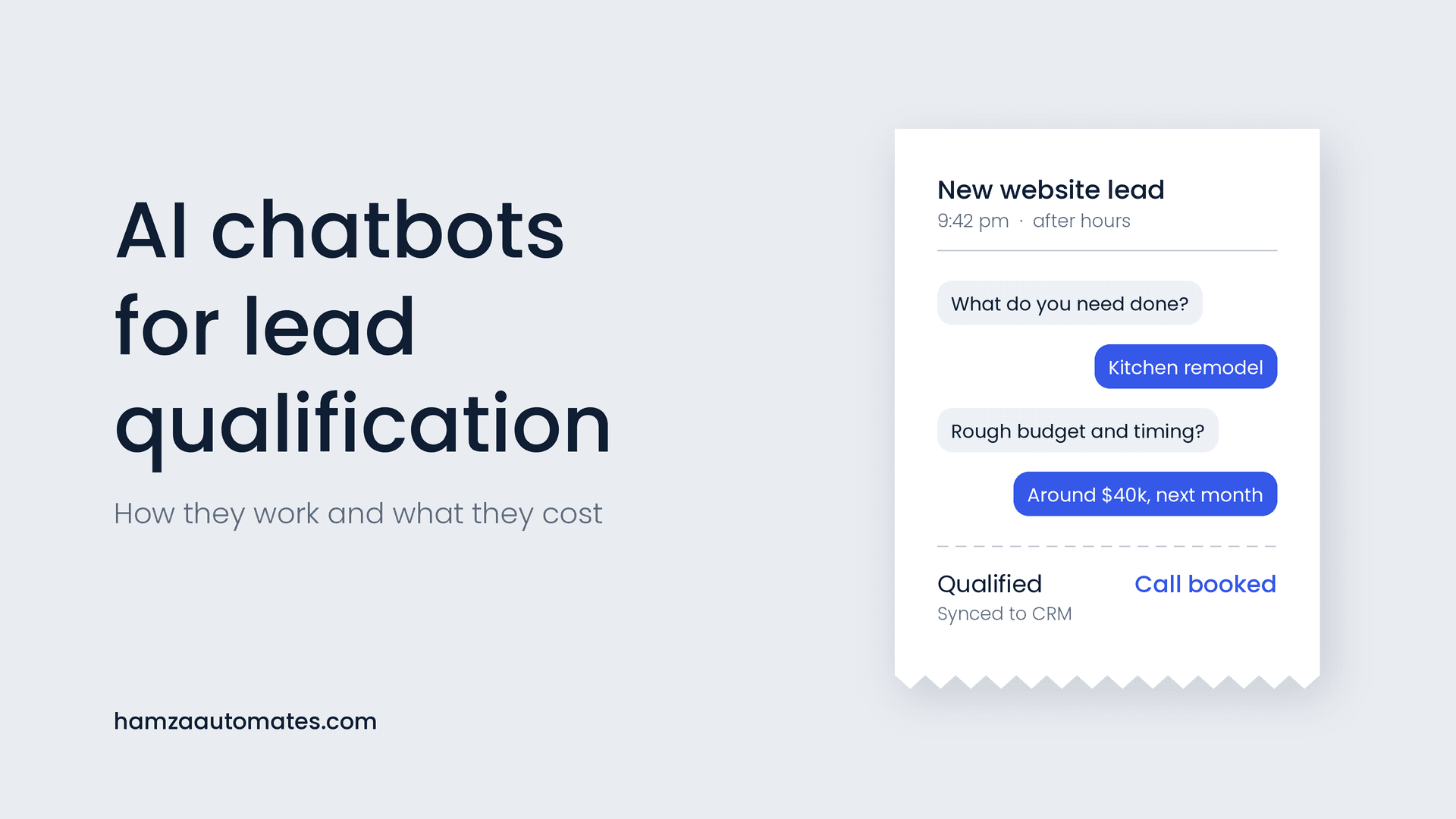
Choose an agency when the system touches customers or revenue (like a lead qualification chatbot or voice agent), connects several tools, needs to be reliable from day one, or will need ongoing improvement. To separate strong agencies from weak ones, use my 10 questions to ask before you hire an AI automation agency.
Option 4: Hire in-house
An in-house automation engineer knows your business deeply and works only on your priorities. It’s also the most expensive option. The U.S. Bureau of Labor Statistics lists a median annual wage of $134,040 for software developers in May 2025, and AI automation specialists with strong integration experience are in high demand. Benefits, payroll taxes, recruiting and tools add a meaningful amount on top, commonly estimated at 25% to 40% of salary.
Pros: Deep knowledge of your business, full-time focus on your priorities and fast iteration. Over time, an in-house person can build up a large library of automations and internal know-how.
Cons: Highest fixed cost, and hiring takes months. One person still has one person’s skill set, and if they leave, much of the knowledge can leave with them unless everything is documented. If you don’t have a steady backlog, you’re paying for idle time.
Choose in-house when automation is central to how your business operates, you have a long backlog of projects, and you’re ready to manage a technical hire. Many companies bring in an agency first, prove the value and then hire in-house to own and extend what was built.
What it costs over 12 months: an illustrative scenario
Hourly rates don’t tell you much on their own. Here’s an illustrative comparison for a common first-year project: a lead qualification chatbot, three supporting workflows (CRM updates, follow-ups and reporting), and ongoing changes throughout the year. Running costs for software and AI usage, typically $150 to $800 a month, apply to every option and aren’t included.
How to decide: five questions
Answer these honestly and the right option usually becomes obvious.
How critical is it? If the system failing would lose you customers or revenue, avoid DIY and lean towards an agency or experienced in-house hire.
How complex is it? One tool talking to another is a freelancer or DIY job. Several systems, AI decisions and guardrails call for a team.
How much ongoing work is there? A one-off build suits a freelancer. Continuous improvements suit an agency retainer. A permanent backlog justifies an in-house hire.
Who will manage it? Freelancers need you to manage scope and quality. Agencies manage themselves. In-house hires need a manager who understands the work.
How fast do you need it? Agencies and freelancers can start within weeks. Hiring in-house usually takes months before anything is built.
Hybrid models that often work best
You don’t have to pick just one. These combinations work well for many businesses:
- Agency builds, in-house owns. An agency designs and builds the core systems, documents them and trains an internal person to maintain and extend them.
- In-house lead, outside capacity. An in-house automation lead sets priorities and standards, and brings in an agency or freelancers for big projects or busy periods.
- DIY for the simple stuff, experts for the critical stuff. Your team handles simple internal automations, and anything customer-facing goes to a professional.
Red flags, whoever you choose
The biggest risks are the same across all four options: no documentation, systems built in someone else’s accounts, no plan for when the AI gets something wrong, and nobody responsible after launch. These are behind many of the failures I describe in why most AI agents fail and why 74% of AI agent deployments get rolled back. Whoever builds your system, insist on ownership, documentation and a clear support plan.
Not sure which option fits?
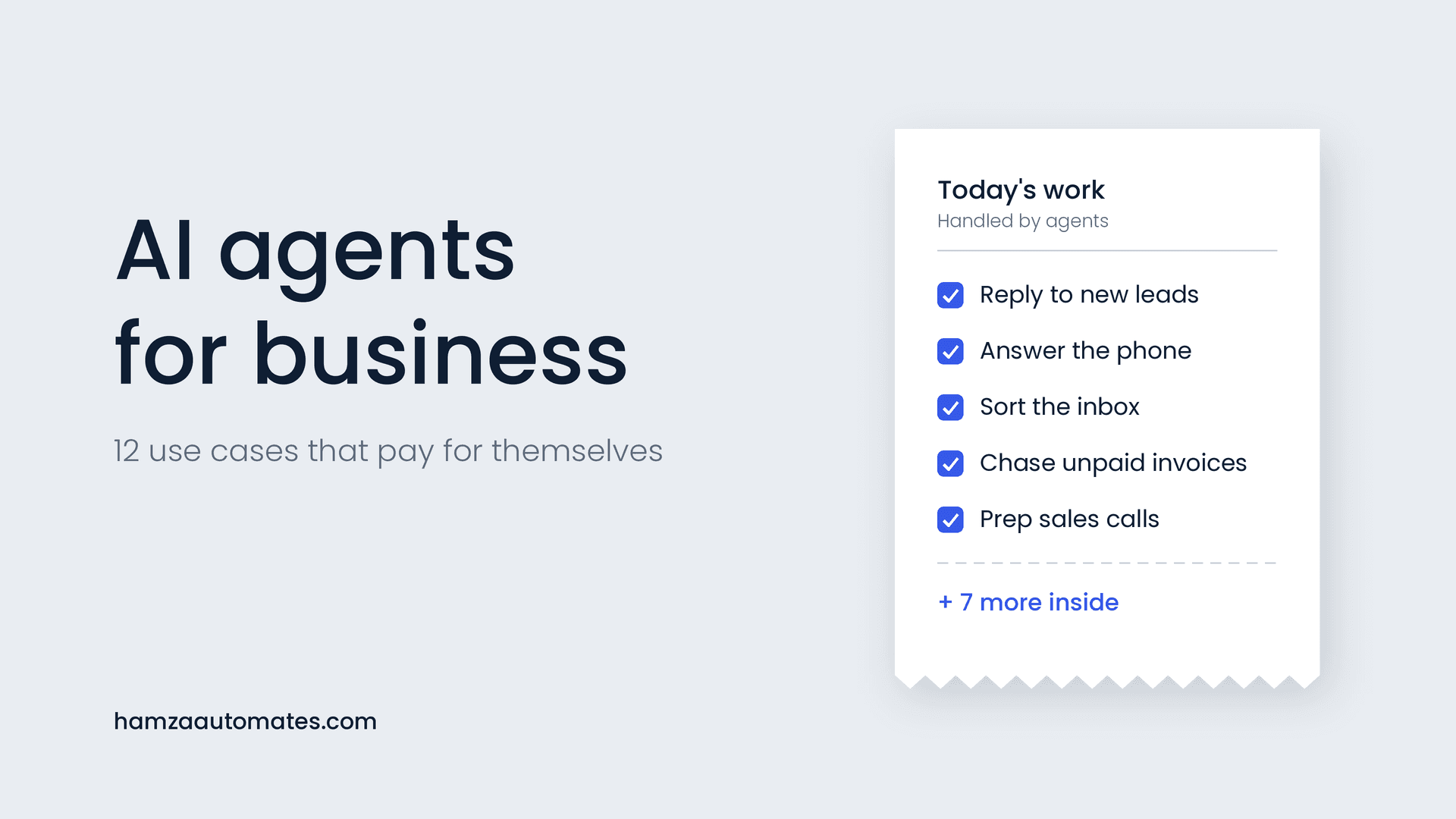
At Hexona Systems, we build AI automations and agents for businesses, and we’ll tell you honestly if your project is better suited to a freelancer or a DIY build. See what we build as an AI automation agency, or book a call and talk through your project. If you’re still deciding what to automate first, start with 12 AI agent use cases that pay for themselves.
Frequently asked questions
Is it cheaper to hire a freelancer or an AI automation agency?
A freelancer is usually cheaper for the same build. An agency costs more but typically includes process design, testing, documentation and ongoing support, and reduces the risk of losing the person who knows your system. For business-critical systems, the total cost of ownership is often closer than the quotes suggest.
When should I hire an in-house automation engineer?
Hire in-house when automation is central to your operations, you have a steady backlog of projects and you can manage a technical hire. Many businesses start with an agency, prove the value and then hire in-house to own and extend the systems.
Can I build AI automations myself?
Yes, for simple internal workflows. No-code tools like n8n, Make and Zapier make it possible without coding. Customer-facing or revenue-critical systems are usually worth building with an experienced partner because of the reliability, error handling and security they need.
How much does an AI automation freelancer charge?
Rates vary widely with experience. Experienced AI automation freelancers commonly charge somewhere around $50 to $150 or more an hour, or a fixed price per project.
What should I insist on, whoever builds my automation?
Insist on a written scope, everything built in accounts you own, documentation good enough for someone else to maintain it, a plan for handling AI mistakes and a clear support arrangement after launch.
About the author: Hamza Baig is the founder of Hexona Systems, an AI automation agency and software platform, and the creator of the AI Automation Institute, where more than 30,000 students have learned to build with AI and automation. He has been featured in Yahoo Finance, CEO Weekly and Brainz Magazine. Follow him on X and LinkedIn.
About
Hamza Baig is the founder of Hexona Systems—an automation agency and softwareplatform that helps thousands of entrepreneurs and business owners implement AI-powered workflows at scale.