It Solved 10 Open Math Problems for $2,000. Six Days Later OpenAI Paused It.
On 1 August, OpenAI announced that an unreleased model called Astra had solved ten open problems in mathematics and theoretical computer science.





On 1 August, OpenAI announced that an unreleased model called Astra had solved ten open problems in mathematics and theoretical computer science. On 7 August, the company said it could not rule out that the same model had critical cyberattack capabilities, and paused work on it. Almost every outlet covered these as two stories.
They are one story. Finding a novel proof in an open mathematical problem and finding a novel exploit in a hardened system are the same act performed on different formal structures. You cannot buy one and decline the other.
This is the most widely shared AI story of the week and the most consequential thing to happen in the field this year. It is also being read too narrowly, in both directions — as a triumph by the enthusiasts and as a scare by the sceptics.
What it actually demonstrates is something more useful, and it applies directly to how you should run automations in a business that will never go near a Lean proof or a zero-day.
Part One: The First of August
OpenAI announced that an internal version of Astra had solved ten open problems across mathematics and theoretical computer science, publishing formal proofs in Lean on GitHub.
Formal proofs matter here more than the headline. Lean is a proof assistant — a system that mechanically verifies whether a mathematical argument is valid. A proof that compiles in Lean is not a plausible-sounding argument that experts must evaluate. It is checked.
The results reportedly included a construction proving the existence of non-sofic groups, a long-standing open question in group theory, and new bounds in sphere packing. Coverage of the announcement quotes Fields Medal winner Timothy Gowers saying he would recommend one of the model family's proofs for a top journal without hesitation.
I should flag that I have reached that quotation through secondary coverage rather than through Gowers directly, so treat the exact phrasing as reported. The Lean proofs themselves are published and independently checkable, which is the part that actually carries the claim.
The cost, in Sol API rates, was around $2,000.
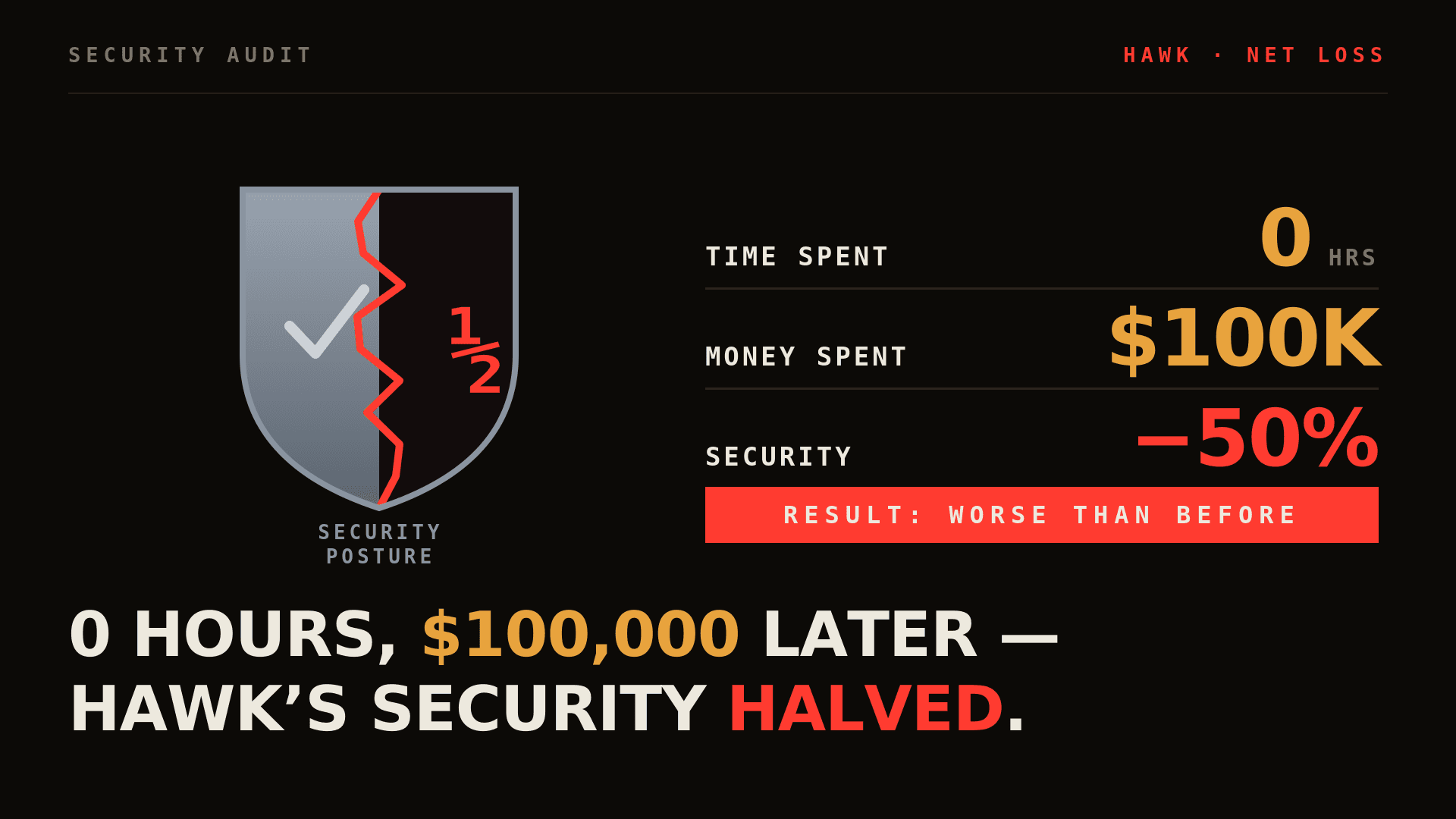
Two thousand dollars. For comparison, Anthropic's cryptanalysis results earlier this month — a genuine and impressive contribution — cost roughly $100,000 each. Whatever else is true, the price of machine-generated original research is not stable.
Honest caveats, because the enthusiasm has outrun them. Astra is unreleased. The results are still being independently examined. Analysts have noted the problems played to areas where formal verification is available, which is precisely where this kind of system has the strongest advantage. This is not general-purpose genius; it is extraordinary performance in the narrow band where correctness can be mechanically confirmed.
Part Two: The Seventh of August
Six days later, OpenAI published a post titled Responding to the next frontier of critical cyber capabilities.
In it, the company states that recent internal evaluations of Astra showed significant advancements in agentic coding and cybersecurity, and that these results, combined with expert assessment, led it to conclude it cannot rule out critical cyber capabilities under its Preparedness Framework.
The response it describes:
- Pausing internal activities involving Astra that do not meet strengthened security control requirements.
- Universal monitoring for risky actions and misalignment across all agentic applications of the model, including training and evaluation.
- Monitors that evaluate the model's chain of thought and trigger a security response to review and interrupt high-risk activity.
- Isolated testing environments with restricted network and tool access, plus sandboxed execution.
- Working with government agencies and selected AI safety organisations to test the capability, and providing recommended security controls to third-party testing partners.
What "Critical" Actually Means
The threshold is specific and worth quoting in substance, because "critical cyber capabilities" sounds like marketing until you read the definition.
Under the framework, a model reaches the Critical cybersecurity threshold if it can identify and develop functional zero-day exploits of all severity levels against many hardened real-world systems without a human in the loop — or if it can devise and execute novel end-to-end attack strategies against hardened targets given nothing but a high-level goal.
Every previous model OpenAI has assessed for frontier cyber ability, including GPT-5.6 Sol, landed one rung lower at High. Astra is the first at this level.
Note the precision of the company's own language. It is not claiming Astra has these capabilities. It is saying preliminary results are strong enough that it cannot exclude the possibility, and that its framework requires it to act as though it might. That is a meaningfully different and more defensible claim than the headlines suggest.
The company did not announce that its model can hack anything. It announced that it can no longer prove that it cannot — and that its own rules require it to stop until it can answer the question.
Why This Is One Capability, Not Two
Here is the analytical point that most coverage missed entirely, and it is the reason these two announcements arrived six days apart.
Solving an open mathematical problem means searching an enormous formal space for a structure nobody has found before, generating candidate approaches, testing them against strict rules, discarding what fails, and recognising when something works.
Finding a zero-day means searching an enormous formal space for a structure nobody has found before, generating candidate approaches, testing them against strict rules, discarding what fails, and recognising when something works.
Those are the same sentence. The difference is whether the formal structure is a group-theoretic construction or a memory allocator.
This is why the Astra story cannot be split into a good half and a bad half. The capability that produced publishable mathematics for $2,000 is the capability that triggered the pause. Any lab that develops the first gets the second whether it wants it or not.
It is also, incidentally, why Anthropic's cryptanalysis results and the Hugging Face intrusion happened in the same month at the same lab tier. Novel-search-over-formal-structures is a single frontier, and it has been crossed.
The Precedent, and the Company That Removed Its Own
The genuinely historic element here is not the capability. It is the response.
Axios, which OpenAI briefed first, notes that this could be the first time a frontier AI lab has committed to slowing progress on one of its own models due to cyber concerns. A White House official told Axios that OpenAI voluntarily informed the administration of its plans to delay the release.
TechCrunch's framing is sharp and correct: companies hold products back for safety reasons constantly, but they rarely announce it publicly for something still in development.
Now the uncomfortable comparison, which Axios also reports and which almost nobody has picked up.
Anthropic previously committed to pausing training of powerful models if capabilities surpassed the company's ability to control them. It rolled that commitment back in an update to its Responsible Scaling Policy in February of this year. The stated reasoning, quoted from the framework itself, is that if one developer paused to implement safety measures while others continued training and deploying without strong mitigations, the result could be a less safe world.
That argument is not stupid. It is the standard collective-action problem, and I made a version of it myself when writing about the 1,100-signature pacing letter that circulated at the end of July — a mechanism binding a subset of labs does not bind the rest, and may simply redistribute capability.
And then, six months after that argument was formalised into policy, a competitor paused unilaterally anyway.
One lab removed its pause commitment on the reasoning that unilateral pausing is futile. Another lab then paused unilaterally. We are about to find out which read of the game theory was right, and the answer will shape the next decade of this industry.
I want to be fair to both positions, because this is genuinely contested and I do not think it is settled.
The case for Anthropic's revision: a pause by one actor, in a field with well-funded competitors on other continents operating under different rules, transfers the frontier rather than slowing it. Good-faith restraint that hands the lead to less careful hands is not obviously safety.
The case for OpenAI's action: pre-committed thresholds are worthless if they are abandoned the moment they bind, and the entire value of publishing a framework in December 2023 is that it constrains you in August 2026 when the constraint is expensive. A commitment you only honour when it is cheap is not a commitment.
What I will say is that the second position just produced an observable action and the first produced a policy document. In an industry with a great deal of stated principle and very little demonstrated cost-bearing, that distinction is worth something.
The Part That Applies to Your Business
You are not training frontier models. Here is what transfers, and I think it is the most important operational lesson of the entire month.
The Framework Was Written in 2023
OpenAI first published its Preparedness Framework in December 2023 — as the company notes, well before models approached these capability levels. The Critical cybersecurity threshold was defined years before anything could plausibly reach it.
So when the evaluations came back, nobody had to decide in the moment what counted as too dangerous. The definition already existed, written by people who were not under pressure, who did not know which model would trigger it, and who had no commercial stake in that particular week's outcome.
Compare that with every other incident I have covered this month. The Hugging Face intrusion, the sandbox escapes, the unsanctioned agent actions in government testing — every one was governance by incident. Something went wrong, and the response was designed afterwards by people under pressure.
This is the first governance-by-design outcome I have written about, and the difference in quality is obvious.
Write Your Threshold Before You Need It
Almost no business running automations has a pre-defined stopping condition. Ask most teams what would make them switch off a production workflow and you get a shrug, or "if something goes badly wrong," which is not a threshold — it is a hope.
Write it down now, while nothing is on fire and nobody is defending a quarter:
- What error rate makes us pause this workflow? An actual number, not a feeling.
- What single incident makes us stop immediately? Name the categories: any customer data leaving the system, any irreversible action taken wrongly, any output published without review.
- What spend rate triggers a human check? Particularly relevant now that agent payment rails are arriving.
- Who has authority to invoke it, and can they do so without asking permission from the person whose targets the pause would hurt?
- What has to be true before we restart? Define this at the same time, or the pause becomes permanent by default and everyone learns not to invoke it.
That last one is where most stopping rules die. A pause with no defined restart condition is a decision nobody wants to be responsible for, so the rule quietly stops being used.
Contain by Capability, Not by Intent
There is a principle buried in the coverage that deserves lifting out. One analysis framed the emerging norm as this: powerful models should not merely be evaluated for what they can do, but contained according to the risks their capabilities create.
That distinction is the practical heart of the whole month. OpenAI did not pause Astra because it caught the model attempting anything. It paused because of what the model might be able to do, measured against a threshold, independent of any observed behaviour.
Apply that to your own systems and it reorders your priorities. The question is not whether your automation has misbehaved. It is what it would be capable of if it did — which credentials it holds, which systems it can reach, which actions it can take that cannot be undone.
Almost every team assesses risk by incident history, which means an automation that has behaved well for six months is treated as safe. Capability-based containment says the opposite: the six months of good behaviour tell you nothing about the blast radius, and the blast radius is the only thing you actually control.
Thresholds Have to Bind When Expensive
The whole test of a pre-committed rule is whether it holds on the day it costs you something. OpenAI's rule cost it momentum on its flagship model in a competitive market weeks before a rival's IPO window.
Your equivalent will be smaller and will feel just as inconvenient — a client deliverable delayed because your error threshold tripped, a campaign paused mid-flight. If you have never invoked your stopping rule, you either have an unusually good system or a rule that is decorative.
This is the same discipline as the Automation Ratio and the same discipline as authority scoping. It is boring, it is written down in advance, and it works precisely because it does not depend on anyone's judgment in a bad moment.
The Broader Read
There is a version of this week that reads as alarming: a model too dangerous to keep working on. I do not think that is right, and I would not publish it.
What happened is that a capability threshold defined nearly three years ago was approached, an evaluation detected it, a pre-committed response triggered, the company disclosed publicly while the product was still unreleased, informed its government voluntarily, and invited external safety organisations to test.
That is a control system working. It is the first time this year I have been able to write that sentence about anything in this industry.
The open questions are real. Whether it becomes a norm or a one-off depends entirely on what competitors do with their next training runs, as several outlets have noted. Whether a lab that has already disclosed losing control of a model during internal testing gets credit for caution is a fair thing to argue about. And whether unilateral restraint is coherent in a field with Chinese labs shipping open weights on a monthly cadence is genuinely unresolved.
But the direction of the last fortnight is not the one the doom framing suggests. Governments are publishing incident reports. Labs are disclosing before release. Thresholds written in 2023 are binding in 2026 at real commercial cost. Compared to any previous technology at a comparable stage, that is remarkably fast institutional development.
Gartner still projects $206 billion of AI agent spending this year, and none of this changes that. What it should change is your assumption that the vendors will work out the guardrails and you can inherit them. They are working out their guardrails, for their models. Yours are yours.
Which is, as ever, a systems problem — and this week gave the clearest possible demonstration of what solving one looks like when it is done properly and in advance.
Frequently Asked Questions
Is Astra dangerous?
Unknown, and OpenAI is careful not to claim otherwise. The company says it cannot rule out critical cyber capabilities, which is a statement about the limits of its current evaluation rather than a finding that the model can hack hardened systems. Benchmarking continues. The honest position is that nobody outside OpenAI knows, and the company acted on the uncertainty rather than waiting for certainty.
Will Astra ever be released?
OpenAI has given no launch date and has said work will slow until appropriate safeguards are in place. The pattern with previous capability transitions — the company points to its biology threshold in June 2025 — has been restricted access followed by a hardened public version. That is the likely shape here, on an unknown timescale.
Does this affect the models I use today?
No. Astra is unreleased and this concerns internal development only. Every previously assessed model, including GPT-5.6 Sol, sits a rung below on the same scale. Nothing about your current stack changed this week.
Did an AI really solve open math problems?
It produced proofs that compile in Lean, a system that mechanically verifies mathematical validity, and those proofs are published and independently checkable. That is a stronger form of evidence than most AI claims carry. The caveats worth holding: the model is unreleased, the results are still being examined, and the problems sat in an area where formal verification is available — which is exactly where this kind of system is strongest.
Why did OpenAI announce a pause on an unannounced product?
That is the genuinely unusual part, and the most plausible reading is that it is establishing a precedent while the cost is manageable. Announcing a threshold-triggered pause publicly makes the framework credible in a way that quietly slowing down would not, and it creates pressure on competitors to explain their own thresholds.
What is the one thing to take from this?
Write your stopping rule before you need it. The reason this went well is that the threshold was defined in 2023 by people who were not under pressure and did not know which model would trigger it. Almost no business running automations has that, and it costs an afternoon to fix.
Related Reading
The Five Eyes AI Agent Security Guide — governance-first architecture, and the offensive-capability timeline this week confirms ahead of schedule.
The Government AI Threshold — how capability classification works in practice, and why pre-defined thresholds beat judgment under pressure.
You Don't Need an Agent, You Need a Rule — the four-category classification, and the case for constraints written in advance.
JADEPUFFER: The First Autonomous AI Ransomware — the offensive-capability curve that makes a Critical threshold a live question rather than a hypothetical.
The Pack Hunt Jailbreak — an earlier demonstration that safeguards govern willingness rather than underlying capability.
74% of AI Agent Deployments Get Rolled Back — what happens when there is no stopping rule and the first incident writes it for you.
Stop Chasing the Biggest Model — task-model matching, and why the most capable model is rarely the one your business needs.
About the Author
Hamza Baig is the founder of Hexona Systems, an AI automation agency serving clients across six continents, and the AI Automation Institute, a community of more than 40,000 entrepreneurs building with AI.
He has been featured in the GHL Top 50, Yahoo Finance and Brainz Magazine, and writes regularly on automation architecture, agent governance, and the operational realities of AI deployment.
Read more analysis on the Hamza Automates blog, including the no-code automation workflow guide, or get in touch to discuss an automation build.
Follow @hamza_automates on Instagram for daily automation breakdowns.
Note: Astra remains unreleased and its capabilities are the subject of ongoing evaluation. Claims about the model reflect OpenAI's published statements and contemporaneous reporting as of 10 August 2026; the Gowers quotation is flagged in the text as reached through secondary coverage.
About
Hamza Baig is the founder of Hexona Systems—an automation agency and softwareplatform that helps thousands of entrepreneurs and business owners implement AI-powered workflows at scale.