Apple's Siri Revolution: What the $1B Google Partnership Means for Enterprise AI Strategy
After analyzing Bloomberg's exclusive report and Apple's strategic moves, I'm breaking down what this means for businesses, automation professionals, and anyone building AI-powered workflows in 2026.





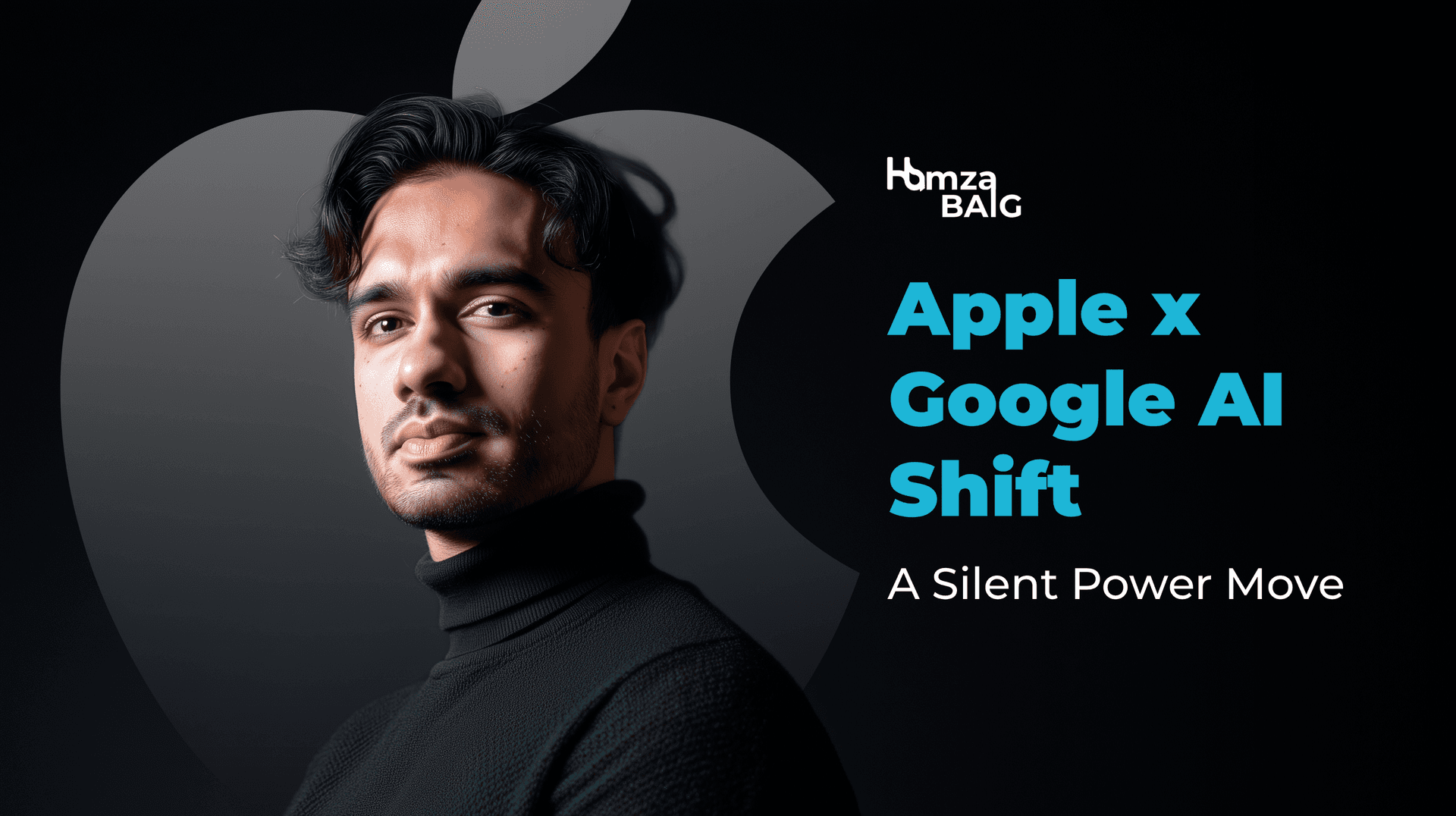
The landscape of conversational AI just shifted dramatically. Apple's announcement of a complete Siri overhaul, backed by a billion-dollar partnership with Google, signals more than just a product upgrade—it represents a fundamental change in how we should think about AI integration, competitive positioning, and the future of intelligent automation.
The Strategic Context: Why Apple Had No Choice
Let me be direct: Apple was falling dangerously behind.
While I've been building automation systems and AI integrations for clients over the past year, one pattern became impossible to ignore—Siri was increasingly absent from enterprise workflows. ChatGPT's 800 million weekly users didn't accumulate by accident. They represent a fundamental shift in how people expect to interact with AI.
The Competitive Pressure Point
When Samsung and Google integrated conversational AI deeply into their mobile ecosystems, they didn't just add features. They created new user expectations. The old Siri model—pre-programmed commands leading to web searches—became noticeably inadequate compared to genuine conversational interfaces.
Apple executives may have downplayed the chatbot experience publicly, but Bloomberg's reporting reveals the internal reality: without a true chatbot, Apple risked irrelevance in the AI era.
This is the key insight: Market leaders don't always lead in innovation. Sometimes, competitive necessity drives transformation faster than internal vision.
Understanding the Two-Phase Rollout Strategy
Apple's approach is more sophisticated than it appears. Rather than rushing a half-baked chatbot to market, they're implementing a measured, two-stage transformation.
Phase 1: Enhanced Traditional Siri (Coming Soon)
The first wave maintains familiarity while expanding capabilities:
- Screen content analysis - Understanding visual context, not just voice commands
- Deeper personal data integration - Leveraging your device information with greater contextual awareness
- Improved web search capabilities - Moving beyond simple query redirection
My take: This phase is about reducing friction for existing users. Apple understands that abrupt interface changes alienate loyal customers. By enhancing the current Siri experience first, they create a bridge to more radical changes.
Phase 2: "Campos" - The True AI Revolution (September 2026)
The second phase, code-named "Campos," represents the complete transformation:
- Conversational interface - Natural dialogue via typing or voice
- System-level integration - Direct control over iOS 27, iPadOS 27, and macOS 27
- App-specific intelligence - Native integration with Mail, Photos, Music, and other Apple applications
- Contextual awareness - Understanding what you're doing, not just what you're saying
This isn't an incremental update. It's a fundamental reimagining of what Siri can be.
The Google Partnership: Strategic Implications
Here's where things get interesting—and controversial.
The $1 Billion Question
Bloomberg reports Apple is paying Google approximately $1 billion annually to license Gemini AI models. The upcoming Campos chatbot will run on a custom, high-end version comparable to Gemini 3.
Why this matters:
1. Apple is buying time, not surrendering control
The deal includes provisions allowing Apple to swap out the underlying AI models over time. This is not a permanent dependency—it's a strategic bridge while Apple develops its own solutions.
2. Privacy implications are significant
The companies are reportedly discussing hosting chatbot processing on Google's servers for enhanced computational power. For a company that built its brand on privacy, this represents a notable shift in priorities.
From an automation strategist's perspective: This reveals Apple's calculation that competitive necessity outweighs privacy absolutism in the short term.
3. The technology gap is real
That Apple would partner with Google—historically a competitor—demonstrates how far behind they fell in conversational AI development. Building competitive large language models requires years of focused investment. Apple chose to license rather than delay.
What This Means for Automation Professionals
As someone who helps businesses build AI-powered automation systems, I see several immediate implications:
1. The AI Assistant Landscape Is Consolidating Around Conversational Models
The era of command-based digital assistants is ending. If you're building automation workflows, design for conversational interfaces, not rigid command structures.
Practical application: When selecting tools for client projects, I now prioritize platforms with natural language capabilities over traditional programmatic interfaces. The future is conversational, and your automation stack should reflect that.
2. Cross-Platform Integration Becomes More Critical
With Siri gaining ChatGPT-like capabilities across Apple's ecosystem, the pressure increases on automation tools to work seamlessly across iOS, macOS, and iPadOS.
Action item: If your automation workflows don't account for Apple devices, 2026 is the year to fix that. By September, hundreds of millions of users will have conversational AI built into their primary devices.
3. Privacy-First AI Is Now Negotiable (Even for Apple)
Apple's willingness to process Siri interactions on Google servers signals that performance trumps privacy when competitive survival is at stake.
Strategic insight: Businesses building AI products should focus first on capability, then optimize for privacy. The market has spoken—users want powerful AI assistants more than they want purely on-device processing.
The Competitive Dynamics: Who Wins, Who Loses
Winners
Google - Gets a billion dollars annually plus increased influence over Apple's AI direction, even as they compete in hardware.
Consumers - Finally get a competent conversational AI built into Apple devices, with the ecosystem integration only Apple can provide.
Enterprise automation vendors - The rising tide of conversational AI adoption lifts all boats. As users become comfortable with chatbots, enterprise AI tools become easier to implement.
Losers
Standalone AI chatbot apps - When iOS 27 ships with Campos built-in, the value proposition for third-party chatbot apps diminishes significantly.
Apple's privacy brand positioning - The shift toward server-side processing, especially on Google infrastructure, complicates Apple's privacy-first messaging.
Amazon Alexa - Already struggling against Google Assistant and ChatGPT, Alexa now faces a revitalized Siri backed by cutting-edge AI.
My Strategic Recommendations
Based on this analysis, here's what I'm advising clients and what I'm implementing in my own automation practice:
For Businesses
1. Prepare for Apple Intelligence integration by Q4 2026
Start auditing your existing workflows for opportunities to leverage Siri's enhanced capabilities once Campos launches.
2. Don't bet exclusively on any single AI platform
Apple's ability to swap AI models reminds us that the underlying technology remains fluid. Build platform-agnostic automation where possible.
3. Accelerate conversational AI adoption
The shift from command-based to conversational interfaces is accelerating. Organizations that lag in this transition will face significant competitive disadvantages.
For Automation Professionals
1. Master conversational interface design
The skills that matter in 2026 aren't just about APIs and integrations—they're about creating natural language experiences that users actually want to use.
2. Study the Apple ecosystem deeply
By September, Apple devices will offer unprecedented AI capabilities. Professionals who understand how to leverage these tools will command premium rates.
3. Watch the model-swapping strategy closely
Apple's modular approach to AI models could become an industry standard. Learn to build systems that can adapt as underlying AI providers change.
The Broader Industry Implications
This announcement extends beyond Apple's product roadmap. It reveals several industry-wide trends:
The End of AI Exceptionalism
Remember when Apple executives dismissed the chatbot experience? That position aged poorly. The lesson: No company is immune to market forces, regardless of brand strength or past success.
Strategic Partnerships Over Pure Innovation
Apple's Google partnership demonstrates that even the world's most valuable company will license technology rather than fall behind. Pride is expensive; partnerships are pragmatic.
The Conversational Interface Becomes Universal
We're witnessing the final transition from command-line thinking to conversational paradigms. Every major tech platform now either has or is building ChatGPT-equivalent capabilities.
What to Watch For
As we approach the June WWDC announcement and September public launch, I'll be monitoring:
1. Privacy guarantees and certifications
How will Apple reconcile Google server processing with its privacy commitments? The details matter enormously.
2. Developer API access
Will third-party developers get access to Campos capabilities? The automation potential multiplies if yes.
3. Pricing and availability
Will enhanced Siri capabilities require subscription fees, new hardware, or specific service tiers? This determines adoption rates.
4. The model swap timeline
How quickly does Apple transition from Google's Gemini to proprietary models? This reveals their true long-term AI strategy.
Final Thoughts: The AI Assistant Wars Enter a New Phase
Apple's Siri transformation marks the beginning of the next chapter in the AI assistant wars, not the end.
We're moving from a world where AI chatbots were optional add-ons to one where conversational AI is deeply integrated into every major computing platform. The implications extend far beyond asking your phone for weather updates.
For businesses, this means AI literacy is no longer optional. For automation professionals, it means our skills need to evolve rapidly. For consumers, it means the frustration of inadequate digital assistants is finally ending.
The bottom line: Apple just validated the conversational AI revolution by committing $1 billion and restructuring their flagship virtual assistant. If you're not already building AI-native workflows, September 2026 is your deadline.
About
Hamza Baig is the founder of Hexona Systems—an automation agency and softwareplatform that helps thousands of entrepreneurs and business owners implement AI-powered workflows at scale.